


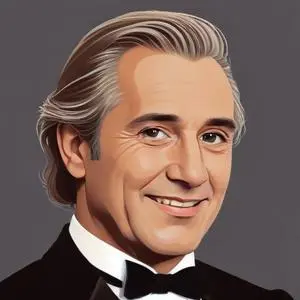
A virtuosic pianist and composer who blended jazz and classical music, creating a unique sound that defied genre boundaries. He's also known for his unorthodox performances and compositions that challenged traditional classical music norms.
Friedrich Gulda was a trailblazing Austrian pianist and composer who effortlessly bridged the gap between classical and jazz music, leaving an indelible mark on the music world. With a career spanning over five decades, Gulda was renowned for his mesmerizing performances, innovative compositions, and unwavering commitment to artistic freedom.
Born on May 16, 1930, in Vienna, Austria, Gulda began his musical journey at the tender age of 7, studying piano with Felix Pazofsky at the Wiener Volkskonservatorium. He later enrolled at the Vienna Music Academy, where he honed his skills under the guidance of esteemed professors Bruno Seidlhofer and Joseph Marx.
As a teenager during World War II, Gulda, along with his friend Joe Zawinul, defied the government's prohibition on playing jazz music, performing forbidden tunes in secret underground sessions. This early rebellion against authority would become a hallmark of Gulda's career, as he continually pushed the boundaries of traditional music.
Gulda's exceptional talent did not go unnoticed. In 1946, he won first prize at the prestigious Geneva International Music Competition, launching his career as a concert pianist. He made his Carnegie Hall debut in 1950, cementing his status as a rising star in the classical music world.
Gulda, along with fellow pianists Jürg Demus and Paul Badura-Skoda, formed the esteemed Viennese troika, a triumvirate of pianists renowned for their mastery of classical music. Together, they performed and recorded the works of Mozart, Beethoven, Schubert, and other classical giants, solidifying Gulda's reputation as a leading interpreter of classical music.
However, Gulda's curiosity and creativity soon led him to explore the world of jazz. He began to incorporate jazz elements into his classical performances, much to the surprise and delight of his audiences. This genre-bending approach earned him both praise and criticism, but Gulda remained undeterred, forging a unique path that blurred the lines between classical and jazz music.
Throughout his life, Gulda continued to defy conventions, recording innovative albums that combined classical and jazz, and even composing original works that showcased his mastery of both genres. His unapologetic commitment to artistic freedom inspired generations of musicians, and his music remains a testament to his boundless creativity and vision.
Friedrich Gulda's extraordinary life and career serve as a testament to the power of creative freedom and innovation. His unwavering commitment to pushing boundaries and defying conventions has inspired generations of musicians, ensuring his legacy as a true maverick of the music world.
Born in 1770
A musical genius who expanded the possibilities of classical music, creating iconic symphonies and piano sonatas that continue to inspire and influence generations of artists.
Born in 1756
A child prodigy and master of classical music, he composed over 600 works, including symphonies, operas, and chamber music, that continue to inspire and influence musicians today.
Born in 1811
A virtuosic pianist and composer who revolutionized classical music with his technically demanding and emotionally expressive works, blending Hungarian folk influences with Romantic-era drama.
Born in 1833
A renowned pianist and composer, he crafted complex, expressive works that blended traditional and innovative techniques, leaving an indelible mark on classical music.
Born in 1883
A pioneering figure in atonality and twelve-tone technique, revolutionizing classical music with concise, expressive works that explored new sounds and structures.
92 Years Old
A controversial radio host and lawyer who sparked heated debates with his outspoken views, ultimately becoming a martyr for free speech after a tragic assassination.
Born in 1874
A pioneer of atonality and 12-tone serialism, revolutionizing classical music with innovative compositions that pushed boundaries of harmony and melody.
Born in 1906
A renowned Russian pianist and composer, known for blending classical music with dark humor and satire, creating iconic symphonies and film scores that still resonate today.
