


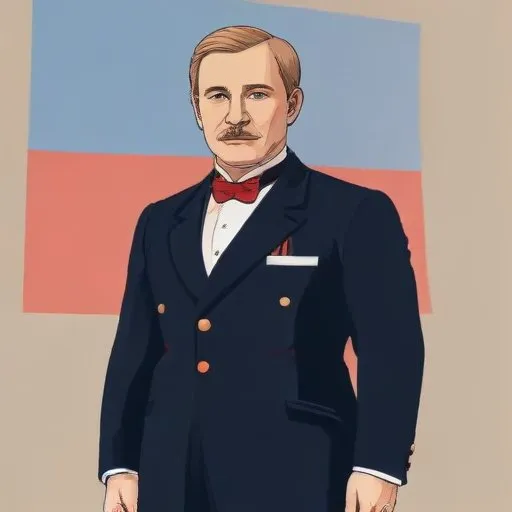
Creator of the German gymnastics movement, known as the "Father of Gymnastics," who introduced outdoor physical education and developed the first modern gymnastics equipment.
Friedrich Ludwig Jahn, affectionately known as "Turnvater Jahn" or the Father of Gymnastics, is credited with founding the German gymnastics movement, which laid the foundation for modern sports clubs. His pioneering work in gymnastics education and nationalist ideology had a profound impact on German society during the early 19th century.
Jahn was born on August 11, 1778, in the village of Lanz, Brandenburg, Prussia. He pursued higher education in theology and philology at the universities of Halle, Göttingen, and Greifswald from 1796 to 1802.
In 1811, Jahn opened the first open-air gymnasium, or Turnplatz, in Hasenheide, Berlin. This marked the beginning of the Turnverein gymnastics association movement, which rapidly spread across Germany. Jahn's innovative approach emphasized the development of physical and moral powers through gymnastics, instilling a sense of national pride and unity among the German people.
Jahn's contributions to the field of gymnastics are immense. He invented several apparatus, including the parallel bars, rings, high bar, pommel horse, and vault horse, which have become staples of modern gymnastics.
Jahn's nationalist spirit was nourished by his experiences during the Napoleonic Wars. In 1809, he joined the Prussian army and later took an active part in the formation of the Lützow Free Corps, a volunteer force fighting against Napoleon. His writings and teachings emphasized the importance of physical and moral strength in the pursuit of national liberation and unity.
Jahn's work had a profound impact on modern society, influencing the development of sports clubs and physical education. The Turnverein movement he founded became a model for modern sports organizations, promoting physical fitness, social cohesion, and national pride. His legacy extends beyond Germany, with his ideas and innovations shaping the global sports landscape.
"The fatherland is not only a piece of land, but also a community of men and women who are connected by a common destiny." - Friedrich Ludwig Jahn
Friedrich Ludwig Jahn's life and work were shaped by the tumultuous period of the Napoleonic Wars and the subsequent struggle for German unification. His contributions to gymnastics education and nationalist ideology continue to inspire generations, solidifying his place as a pioneer in the history of sports and physical education.
Jahn's legacy extends beyond the realm of sports, influencing the development of modern society and the cultivation of national identity. As the Father of Gymnastics, his innovative spirit, nationalist fervor, and passion for physical education continue to inspire and shape the world of sports today.
Born in 1762
A German philosopher and academic who developed the concept of German idealism, emphasizing the role of the individual and the nation in shaping reality. He's known for his influence on German philosophy and the development of existentialism.
Born in 1759
A renowned poet and playwright who crafted influential works that explored the human condition, morality, and the struggle for freedom, leaving a lasting impact on German literature.
Born in 1749
A German literary giant who penned iconic works like "Faust" and "The Sorrows of Young Werther", shaping the Romantic movement and influencing countless writers.
