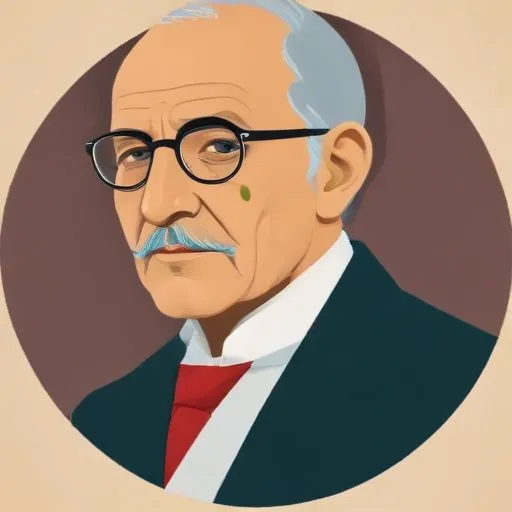
Fritz Pregl: The Father of Quantitative Organic Microanalysis
A Legacy of Precision and Innovation
Fritz Pregl, a Slovenian-Austrian chemist and physician, left an indelible mark on the field of organic chemistry. He is renowned for his groundbreaking contributions to quantitative organic microanalysis, which earned him the Nobel Prize in Chemistry in 1923.
Early Life and Education
Born on September 3, 1869, in Ljubljana, Austria-Hungary (present-day Slovenia), Pregl was the son of a Slovene-speaking father and a German-speaking mother. He was baptized Friedrich Michael Raimund Pregl. Pregl's academic pursuits took him to the University of Graz, where he studied medicine and later shifted his focus to chemistry.
The Quest for Precision
Pregl's work in chemical physiology led him to confront the limitations of quantitative organic microanalysis. He struggled to analyze the small quantities of substances he obtained during his research on bile acid. This challenge sparked a passion for innovation, driving Pregl to develop new methods that would reduce the necessary components for elemental analysis. Through sheer dedication and perseverance, he successfully lowered the minimal amount of substance required for analysis by a staggering factor of 50.
Commemoration and Recognition
In recognition of Pregl's outstanding contributions, the department of the University of Graz where he worked was renamed the Institute of Medical Chemistry and Pregl Laboratory in 1950. Streets in Graz, Innsbruck, Vienna, and Klagenfurt were named in his honor. In Slovenia, the Pregl Awards have been bestowed annually since 2007 by the National Institute of Chemistry to recognize outstanding research work and doctorates. Additionally, Slovenian pupils and secondary school students are conferred Pregl Recognition Awards and Pregl Citations for their exceptional performance in national chemistry competitions.
Legacy and Impact
Pregl's pioneering work in quantitative organic microanalysis has had a profound impact on the development of modern chemistry. His innovative methods paved the way for future generations of scientists to explore and analyze complex substances with unprecedented precision. The Fritz Pregl Prize, established in 1931, is awarded annually by the Austrian Academy of Sciences to recognize outstanding contributions to chemistry.
Trivia and Fun Facts
- Pregl's improvements to the combustion train technique for elemental analysis remain a cornerstone of modern analytical chemistry.
- In 1923, Pregl was the first Slovenian to receive a Nobel Prize.
- A square in Ljubljana, Slovenia, is named after Pregl, a testament to his enduring legacy.
A Lasting Legacy
Fritz Pregl's unwavering commitment to precision and innovation has left an indelible mark on the world of chemistry. His groundbreaking contributions have inspired generations of scientists, and his legacy continues to shape the course of modern chemical research.
FAQ
What was Fritz Pregls contribution to chemistry?
Fritz Pregl was a Slovenian chemist and physician who developed the first exact method for quantitative organic microanalysis, known as Pregls method.
What was Fritz Pregl awarded the Nobel Prize for?
Pregl was awarded the Nobel Prize in Chemistry in 1923 for his development of microanalytical methods, which enabled precise measurement of small quantities of organic compounds.
What were Fritz Pregls research interests?
Pregls research focused on organic chemistry, particularly the analysis of alkaloids, and he made significant contributions to the field of pharmacology and toxicology.
What was Fritz Pregls role in the development of pharmacology?
Pregls work on microanalysis enabled the development of more accurate and precise methods for determining the composition of pharmaceuticals, which improved the field of pharmacology.
How is Fritz Pregl remembered in the scientific community?
Fritz Pregl is remembered as a pioneer in the field of microanalysis, celebrated for his innovative methods and significant contributions to organic chemistry and pharmacology.