


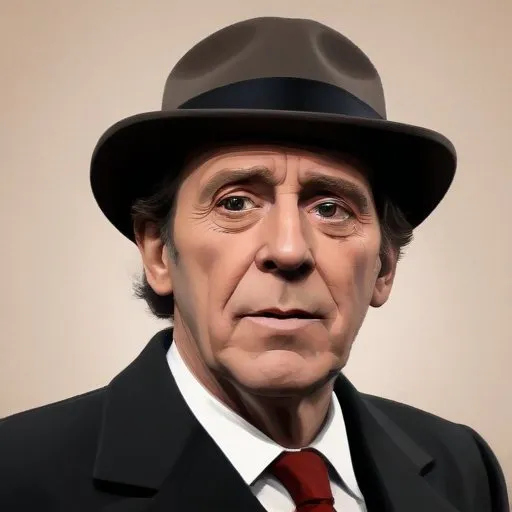
A Tony Award-winning actor who brought complex characters to life on stage and screen, earning multiple Emmy nominations for his work on TV shows like "Holocaust" and "The Twilight Zone".
Fritz Weaver was a renowned American actor who left an indelible mark on the world of theatre, television, and film. With a career spanning nearly 60 years, he appeared in over 170 productions, earning him a Tony Award, a Drama Desk Award, and multiple nominations for his outstanding performances.
Weaver's most notable award was the 1970 Tony Award for Best Actor in a Play for his portrayal of Jerome Malley in the original Broadway production of Child's Play. He also received a Drama Desk Award for Outstanding Performance for the same role. Additionally, he was nominated for a Tony Award for Best Featured Actor in a Play for The Chalk Garden in 1958.
Weaver was highly regarded for his Shakespearean performances, showcasing his versatility as an actor. One of his most memorable roles was as Sherlock Holmes in the musical Baker Street. His impressive range extended to film, with notable appearances in Fail Safe (1964), Marathon Man (1976), Black Sunday (1977), Demon Seed (1977), Creepshow (1982), and The Thomas Crown Affair (1999).
Weaver made his television debut in 1956 with an episode of The United States Steel Hour. He went on to appear in numerous television shows, including The Twilight Zone, Way Out, Night Gallery, The Martian Chronicles, and The X-Files. His narration work on educational television programs further showcased his talent. One of his most notable television roles was as Dr. Josef Weiss in the 1978 miniseries Holocaust, earning him a Primetime Emmy Award nomination for Outstanding Lead Actor in a Limited Series or Movie.
Fritz Weaver was born on January 19, 1926, in Pittsburgh, Pennsylvania, to Elsa W. Weaver (née Stringaro) and John Carson Weaver. His mother was of Italian descent, and his father was a social worker with deep American roots. Weaver attended the Fanny Edel Falk Laboratory School at the University of Pittsburgh and Peabody High School. During World War II, he served in the Civilian Public Service as a conscientious objector. After the war, he worked various jobs before turning to acting in the early 1950s.
Fritz Weaver's illustrious career has left a lasting impact on the world of entertainment. With his incredible range and versatility, he has inspired generations of actors and continues to be celebrated for his contributions to theatre, television, and film.
In conclusion, Fritz Weaver's remarkable career is a testament to his talent, dedication, and passion for his craft. He will be remembered as one of the most iconic actors of his time, leaving behind a legacy that will continue to inspire and delight audiences for years to come.
Born in 1907
A talented artist who excelled in various fields, including acting, singing, directing, producing, and screenwriting, with iconic roles in films like "The Day of the Locust" and "Rocky."
Born in 1914
A veteran character actor with a distinctive voice, known for playing authoritative figures in film and television, including the iconic TV series "12 Angry Men" and "Law & Order".
Born in 1901
A veteran character actor with a distinctive voice, known for playing lovable, eccentric, and often bumbling characters in numerous films and TV shows.
Born in 1920
A talented actor who brought humor and charm to a wide range of film roles, from dramatic leads to comedic supporting characters, earning multiple Academy Award nominations.
Born in 1925
A legendary actor who brought laughter and tears to audiences with his iconic roles in films like "Some Like It Hot" and "Days of Wine and Roses", earning him numerous Academy Award nominations.
Born in 1920
A legendary comedic actor, director, and producer, best known for his iconic roles in TV sitcoms, particularly as Felix Unger in "The Odd Couple".
Born in 1922
Star of iconic TV shows "The Odd Couple" and "Quincy, M.E.", a talented actor who brought memorable characters to life with his unique blend of humor and drama.
Born in 1924
Creator of the iconic sci-fi anthology series that explores the human condition through supernatural and psychological themes, blending social commentary with eerie storytelling.
