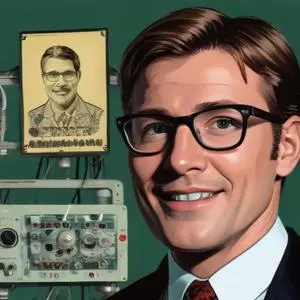
Gary Kildall: The Pioneer of the Personal Computer Revolution
The Visionary Behind the CPM Operating System
Gary Kildall, an American computer scientist and microcomputer entrepreneur, is renowned for creating the CPM (Control Program for Microcomputers) operating system, a pioneering achievement that revolutionized the personal computer industry. His innovative work in the 1970s paved the way for the development of modern operating systems, including MSDOS, and earned him a place among the earliest pioneers of the personal computer era.
A Family of Maritime Roots
Born on May 19, 1942, in Seattle, Washington, Gary Kildall grew up in a family of sea captains and sailors. His father, Joseph Kildall, was a captain of Norwegian heritage, and his mother, Emma, was of half Swedish descent. The family operated a seamanship school, where Gary developed a strong foundation in mathematics and problem-solving skills.
Academic Pursuits and Early Career
Kildall earned a Bachelor's degree in Mathematics from the University of Washington in 1967, followed by a Master's degree in Computer Science in 1968. During his academic pursuits, he became fascinated with computer programming and was inspired by the potential of microprocessors to become fully capable computers.
The Birth of CPM and Digital Research, Inc.
In 1974, Kildall created the first working prototype of CPM, demonstrating its capabilities at a conference in Pacific Grove, California. This breakthrough led to the founding of Digital Research, Inc. (DRI), a company dedicated to marketing and selling his software products. CPM's multiplatform compatibility and flexibility made it an instant success, and it soon became the industry standard for microcomputer operating systems.
The BIOS Revolution
Kildall's invention of the BIOS (Basic Input/Output System) allowed microprocessor-based computers to communicate with disk storage, a critical innovation that further solidified CPM's position in the market. This pioneering work cemented Kildall's reputation as a visionary in the field of personal computing.
Television Personality and Educator
During the 1980s, Kildall co-hosted the popular PBS program
Computer Chronicles, alongside Stewart Cheifet. This weekly informational program covered the latest developments in personal computing, educating millions of viewers on the rapidly evolving technology.
Legacy and Impact
Gary Kildall's contributions to the development of personal computing have had a lasting impact on modern society. His work on CPM and the BIOS paved the way for the creation of modern operating systems, including MSDOS, and inspired a generation of computer scientists and entrepreneurs. Today, Kildall is remembered as a true pioneer of the personal computer revolution, a testament to the power of innovation and vision.
Major Works and Career Highlights
- Creation of the CPM operating system (1974)
- Founding of Digital Research, Inc. (DRI) (1974)
- Invention of the BIOS (Basic Input/Output System)
- Cohost of PBS's Computer Chronicles (1980s)
Personal Milestones and Key Life Events
- Born on May 19, 1942, in Seattle, Washington
- Earned Bachelor's degree in Mathematics from the University of Washington (1967)
- Earned Master's degree in Computer Science from the University of Washington (1968)
- Passed away on July 11, 1994
Philosophical Contributions and Beliefs
Gary Kildall's work embodied his belief in the potential of microprocessors to revolutionize personal computing. He was a strong advocate for the importance of education and innovation in the technology sector, inspiring countless individuals to pursue careers in computer science and entrepreneurship.
FAQ
What is Gary Kildalls most notable achievement?
Gary Kildall was an American computer scientist and founder of Digital Research Inc. (DRI), who developed the CP/M operating system.
What was Gary Kildalls background in computer science?
Gary Kildall was a pioneering computer scientist who earned his Ph.D. in computer science from the University of Washington.
How did Gary Kildall develop CP/M?
Gary Kildall developed CP/M in the 1970s, initially for Intel microprocessors, and later for other platforms.
What are Gary Kildalls notable contributions to computer science?
Gary Kildalls notable contributions to computer science include developing CP/M, which was a widely-used operating system in the 1970s and 1980s.
What is Gary Kildalls legacy in computer history?
Gary Kildalls legacy in computer history is significant, as he played a major role in the development of the personal computer industry and paved the way for later operating systems, including MS-DOS and Windows.