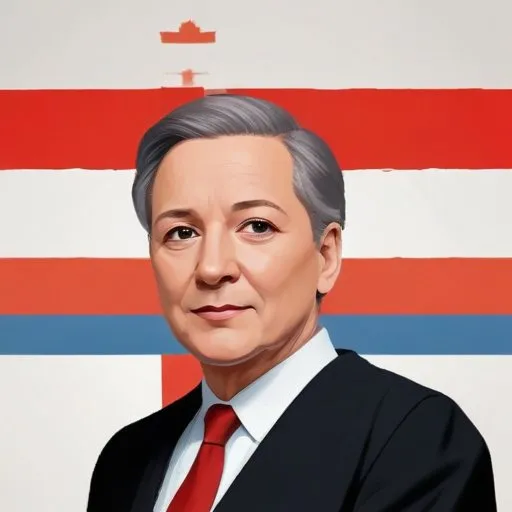
Gdon Ouimet: The Second Premier of Quebec
A Leader in Turbulent Times
Gdon Ouimet is known for being the second premier of Quebec, serving from February 26, 1873, to September 22, 1874, during a period of great change and controversy in the province's history. Ouimet's leadership was marked by his involvement in the Tanneries scandal, which ultimately led to his resignation as party leader of the Conservative Party of Quebec.
Early Life and Education
Born on June 2, 1823, in what is today part of the city of Laval, Quebec, Canada, Ouimet grew up in a French-Canadian family. Little is known about his early life and education, but it is clear that he was driven to make a difference in his community.
Rise to Power
Ouimet's entry into politics was marked by his election to the Legislative Assembly of Quebec in 1867. He quickly rose through the ranks, becoming a prominent figure in the Conservative Party of Quebec. In 1873, he was appointed premier, succeeding Pierre-Joseph-Olivier Chauveau.
The Tanneries Scandal
Ouimet's time in office was marred by the Tanneries scandal, which implicated the government of Quebec in a corruption scheme. The scandal ultimately led to Ouimet's resignation as party leader in 1874. Although he denied any wrongdoing, the scandal tarnished his reputation and legacy.
Later Life and Legacy
After his resignation, Ouimet continued to serve in public life, albeit in a diminished capacity. He was appointed to the Legislative Council of Quebec in 1895, where he served until his death on April 23, 1905.
Honors and Tributes
Ouimet's legacy is still felt today. The Quebec town of Grandmont changed its name to Saint-Gdon in his honor, and a bridge on Highway 15 Laurentian was named after him. The bridge connects the municipality of Laval to the northern shore in what is now known as the town of Boisbriand.
Impact on Quebec Politics
Ouimet's time in office was marked by controversy, but he also played a significant role in shaping Quebec's politics. He was a strong advocate for the rights of French-Canadians and worked to promote the interests of the province within the Canadian Confederation.
Personal Life
Little is known about Ouimet's personal life, but it is clear that he was dedicated to his work and his community. He spent his later years in Mont-Saint-Hilaire, Quebec, where he died in 1905.
Timeline of Major Events
- 1823: Born in what is today part of the city of Laval, Quebec, Canada
- 1867: Elected to the Legislative Assembly of Quebec
- 1873: Appointed premier of Quebec
- 1874: Resigned as party leader due to the Tanneries scandal
- 1895: Appointed to the Legislative Council of Quebec
- 1905: Died in Mont-Saint-Hilaire, Quebec
Conclusion
Gdon Ouimet's legacy is complex and multifaceted. While he was a leader in turbulent times, his involvement in the Tanneries scandal tarnished his reputation. Despite this, he remains an important figure in Quebec's history, and his contributions to the province's politics and development are still felt today.
FAQ
What was Gédéon Ouimets role in Canadian politics?
Gédéon Ouimet served as the 2nd Premier of Quebec, playing a crucial role in shaping the provinces politics during the late 19th century. He was a prominent figure in Quebecs Conservative Party and held office from 1873 to 1874.
What were Gédéon Ouimets contributions to Quebecs education system?
As Premier of Quebec, Ouimet implemented significant reforms to the provinces education system, including the establishment of the Ministry of Public Instruction and the creation of the Quebec Protestant School System.
What was Gédéon Ouimets stance on Quebecs language laws?
Ouimet was a strong advocate for the use of French as an official language in Quebec, and he played a key role in the passage of the Quebec Language Law in 1873.
What was Gédéon Ouimets relationship with Sir John A. Macdonald?
Ouimet had a close relationship with Sir John A. Macdonald, the first Prime Minister of Canada, and served as a key advisor to Macdonald on Quebec-related issues.
What was Gédéon Ouimets legacy in Quebec politics?
Ouimets legacy in Quebec politics is marked by his commitment to education, language laws, and provincial autonomy, making him a respected figure in the provinces history.