


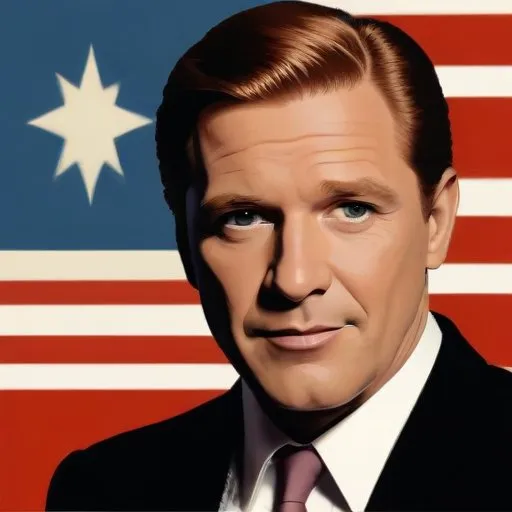
Actor, director, and screenwriter who worked in film and television, best known for his choreography and direction of musicals, particularly in the 1950s and 1960s.
Gene Nelson, born Leander Eugene Berg on March 24, 1920, was an American actor, dancer, screenwriter, and director whose multifaceted talent left an indelible mark on Hollywood's Golden Age. With a career spanning over four decades, Nelson's impressive resume boasted iconic film and stage performances, as well as notable work behind the camera.
After serving in the Army during World War II, Nelson's passion for dance led him to land his first Broadway role in Lend an Ear, earning a Theatre World Award for his performance. This success paved the way for his film debut in Lullaby of Broadway (1951), where he starred alongside the legendary Doris Day.
Nelson's longtime professional dance partner, actress JoAnn Dean Killingsworth, shared the screen with him in several films and stage productions throughout the 1950s. His impressive dance skills led to memorable performances in Oklahoma! (1955) and Tea for Two (1950).
In addition to his acting and dancing credits, Nelson ventured into direction and screenwriting. He directed eight episodes of The Rifleman (1961-1962), as well as episodes of Star Trek, I Dream of Jeannie, and Gunsmoke. Nelson also penned the screenplay for Kissin' Cousins (1964), earning a Writers Guild of America award nomination for Best Written Musical.
Nelson's critically acclaimed performance as Buddy in the 1971 Broadway musical Follies, featuring a score by Stephen Sondheim, earned him a 1972 Tony Award nomination for Featured Actor in a Musical.
Gene Nelson's diverse career, marked by his versatility and passion for the performing arts, continues to inspire generations of artists. As a teacher, he shared his knowledge with students at San Francisco State University's Theater Arts Department, ensuring his legacy would endure long after the curtains closed.
Gene Nelson's contributions to the entertainment industry have left a lasting impact on popular culture. His work in film and television helped shape the course of American entertainment, while his passion for dance and theater continues to inspire artists today.
Born in 1925
A legendary actor who brought laughter and tears to audiences with his iconic roles in films like "Some Like It Hot" and "Days of Wine and Roses", earning him numerous Academy Award nominations.
Born in 1925
A dashing Hollywood heartthrob, starring in iconic films like "Some Like It Hot" and "Spartacus," charming audiences with his good looks and acting talent.
Born in 1920
A talented actor who brought humor and charm to a wide range of film roles, from dramatic leads to comedic supporting characters, earning multiple Academy Award nominations.
Born in 1906
Academy Award-winning filmmaker behind iconic movies like "Some Like It Hot" and "Sunset Boulevard", known for his witty dialogue and genre-bending storytelling.
Born in 1926
An iconic blonde bombshell who captivated audiences with her stunning looks and charming on-screen presence, symbolizing Hollywood glamour and sensuality in the 1950s and 60s.
Born in 1917
A legendary entertainer, known for smooth vocals, charming on-screen presence, and iconic Rat Pack performances, leaving a lasting impact on the music and film industries.
Born in 1926
A legendary comedian and actor, best known for his slapstick humor, impressive physical comedy, and iconic films like "The Nutty Professor" and "Martin and Lewis" duo with Dean Martin.
Born in 1915
A legendary entertainer who charmed audiences with smooth vocals and iconic film roles, leaving an indelible mark on American popular culture.
