


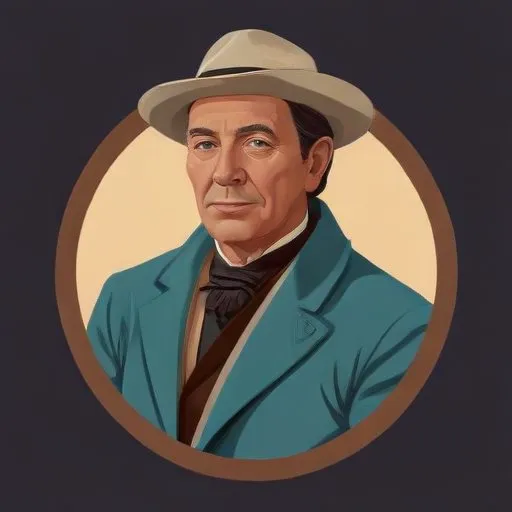
An American explorer, author, and scholar who uncovered ancient Inca cities and wrote extensively on Peruvian history and culture, earning recognition for his groundbreaking archaeological discoveries.
Gene Savoy, a renowned American explorer, author, and religious leader, is best known for his extraordinary claims of discovering over 40 lost cities in Peru, shedding light on the country's most important archaeological sites, including Vilcabamba, the last refuge of the Incas during the Spanish conquest.
Born on May 11, 1927, in Bellingham, Washington, Savoy's journey began with a stint in the U.S. Navy during World War II. After serving for two years, he enrolled at the University of Portland to pursue priesthood studies. However, a chance encounter with Monsignor John B. Delaunay, who compared him to Teilhard de Chardin, led Savoy to take a year off to follow his heart and pursue his studies privately.
During the next ten years, Savoy worked as a journalist, while continuing to study regional Indian petroglyphs and religion. He delved into the literature, legends, and folklore of the North American Indians in the Pacific Northwest, fascinated by the possibility of early contacts between North and South America. This period also saw him explore mystic Judaism and Christianity, Buddhism, Hinduism, Zoroastrianism, the Chinese classics, and the Gnostic writings under the guidance of direct disciples of Khalil Gibran and Paul Brunton.
In the 1960s, Savoy's expeditions in Peru led to the discovery of numerous lost cities, earning him recognition as one of the premier explorers of the time. Although he did not discover Gran Pajaten, he is credited with naming the site. His findings shed light on the rich cultural heritage of Peru, unveiling secrets that had been hidden for centuries.
In 1971, Savoy became the Head Bishop of the International Community of Christ, Church of the Second Advent, a position he held until his death in 2007. His theological contributions focused on the convergence of mysticism and Christianity, drawing parallels between various religious traditions.
Gene Savoy's remarkable journey, marked by exploration, discovery, and spiritual pursuits, has left an indelible mark on our understanding of Peru's rich cultural heritage and the world beyond.
Born in 1914
A pioneering explorer who sailed ancient-style boats across oceans to prove migration theories, and led the famous Kon-Tiki expedition across the Pacific.
Born in 1910
A pioneering oceanographer who co-developed the aqua-lung, allowing humans to explore the underwater world, and documented his discoveries through captivating films and books.
84 Years Old
Led a team that discovered the wreck of the Titanic, and has explored and mapped numerous other shipwrecks and ocean floors.
Born in 1874
Discovered the tomb of Pharaoh Tutankhamun in Egypt, uncovering thousands of artifacts and treasures that revealed secrets of ancient Egyptian life.
84 Years Old
Legendary musician and founding member of the Grateful Dead, known for his soulful voice, masterful guitar playing, and iconic psychedelic rock sound. 82
