


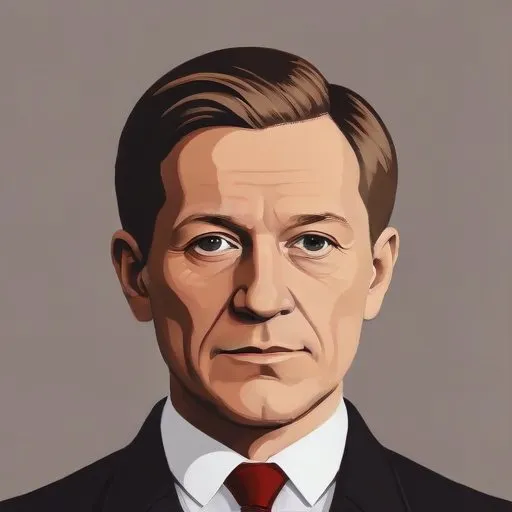
A pioneering ethnologist and journalist who traveled extensively, documenting indigenous cultures and advocating for social justice, leaving a lasting impact on our understanding of diverse societies.
Georg Forster, a German geographer, naturalist, ethnologist, travel writer, journalist, and revolutionary, left an indelible mark on the scientific community and beyond. Best known for his groundbreaking report, A Voyage Round the World, which chronicled James Cook's second voyage to the Pacific, Forster's work significantly contributed to the study of Polynesian ethnology and earned him recognition as one of the founders of modern scientific travel literature.
Accompanying his father, Johann Reinhold Forster, on several scientific expeditions from a young age, Georg developed a passion for exploration and discovery. This early exposure laid the foundation for his future accomplishments, including his admittance to the Royal Society at the remarkable age of 22.
Upon returning to continental Europe, Forster devoted himself to academia, teaching natural history at the Collegium Carolinum in Kassel (1778-1784) and later at the Academy of Vilna (Vilnius University, 1784-1787). As head librarian at the University of Mainz (1788), he continued to produce a wealth of essays on botany and ethnology, while also translating and prefacing numerous books on travel and exploration, including a German translation of Cook's diaries.
Forster was a central figure of the Enlightenment in Germany, engaging in lively correspondence with prominent thinkers of the era, including his close friend Georg Christoph Lichtenberg. His ideas, travelogues, and charismatic personality inspired a generation of scientists, among them Alexander von Humboldt, who hailed Forster as the founder of both comparative ethnology (Völkerkunde) and regional geography (Länderkunde).
In 1792, when the French took control of Mainz, Forster played a leading role in the Mainz Republic, the earliest republican state in Germany. As a delegate of the young republic, he traveled to Paris in 1793, but was subsequently declared an outlaw by Prussian and Austrian coalition forces when they retook control of the city.
Georg Forster's contributions to science, literature, and politics have left an enduring legacy. His groundbreaking work in ethnology, botany, and geography paved the way for future generations of scientists, while his involvement in the Mainz Republic foreshadowed the rise of democratic movements across Europe.
Through his remarkable life and achievements, Georg Forster continues to inspire generations of scholars, scientists, and thinkers, leaving behind a rich legacy that transcends the boundaries of time and discipline.
Born in 1724
Developed influential philosophical frameworks, such as the Critique of Pure Reason, that shaped modern Western thought on ethics, morality, and human understanding.
Born in 1749
A German literary giant who penned iconic works like "Faust" and "The Sorrows of Young Werther", shaping the Romantic movement and influencing countless writers.
Born in 1769
A pioneering geographer and explorer who mapped much of South America and discovered the Caspian Sea's connection to the Black Sea, greatly advancing our understanding of the natural world.
Born in 1759
A renowned poet and playwright who crafted influential works that explored the human condition, morality, and the struggle for freedom, leaving a lasting impact on German literature.
Born in 1762
A German philosopher and academic who developed the concept of German idealism, emphasizing the role of the individual and the nation in shaping reality. He's known for his influence on German philosophy and the development of existentialism.
Born in 1833
A renowned geographer and academic who pioneered the field of geomorphology, mapping and describing the Earth's landforms and landscapes. He's credited with coining the term "Silk Road" to describe the ancient trade routes between Europe and Asia.
Born in 1779
Founded the modern academic field of geography, emphasizing the importance of human-environment interactions and cultural differences in shaping the world around us.
Born in 1821
A 19th-century German explorer and scholar who traveled extensively throughout Africa, mapping territories and documenting local cultures, making significant contributions to the field of African studies.
