


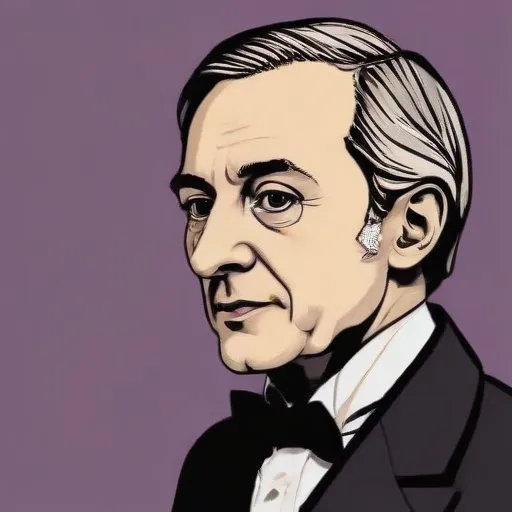
Founded the first university to admit students of all backgrounds, regardless of race, class, or gender, and pioneered adult education. He's known for democratizing access to higher education.
George Birkbeck, a British physician, academic, and philanthropist, is renowned for founding Birkbeck, University of London, and pioneering adult education through the establishment of mechanics institutes in Scotland and London. His groundbreaking work in making education accessible to the working class left an indelible mark on the educational landscape of the 19th century.
Born on January 10, 1776, in Settle, West Riding of Yorkshire, to a Quaker family, Birkbeck's parents, William and Sarah, instilled in him a strong sense of social responsibility. He attended Sedbergh School and later studied medicine at Leeds and London, eventually earning his MD degree from the University of Edinburgh Medical School in 1799.
Birkbeck's academic career began as a professor of natural philosophy at the Andersonian Institute in Glasgow (now the University of Strathclyde). His innovative approach to education led him to hold free, public lectures on mechanical arts, which attracted large crowds and eventually gave rise to the formation of the first mechanics institute in Edinburgh in 1821.
These institutes, which offered classes, libraries, and apparatus for experiments, revolutionized adult education by providing access to knowledge and skills for the working class. Birkbeck's vision was to empower individuals through education, enabling them to improve their socio-economic conditions.
The success of the Edinburgh institute led to the establishment of similar institutions in Scotland and London. Birkbeck's collaboration with prominent figures such as George Grote, Henry Brougham, and Jeremy Bentham further solidified his vision for accessible education.
In 1809, Birkbeck assisted in founding the London Institution, which aimed to provide educational opportunities for the working class. This institution, along with the mechanics institutes, played a crucial role in shaping the intellectual and socio-economic landscape of 19th-century Britain.
Birkbeck's pioneering work in adult education has had a lasting impact on modern society. His establishment of Birkbeck, University of London, has enabled generations of students to pursue higher education, regardless of their socio-economic background.
Today, the University of London's Birkbeck College stands as a testament to Birkbeck's vision of accessible education, offering a range of programs and courses to students from diverse backgrounds.
Birkbeck's philosophical contributions were rooted in his belief that education should be accessible to all, regardless of social class or background. He championed the cause of adult learning, recognizing that knowledge and skills were essential for individual and societal improvement.
His commitment to democratizing education resonated with the liberal ideals of his contemporaries, including George Grote and Henry Brougham. Together, they worked towards creating a more equitable society through education and social reform.
Birkbeck's life was marked by several significant milestones, including his appointment as professor of natural philosophy at the Andersonian Institute and his founding of the London Institution.
He also played a crucial role in establishing the Chemical Society, of which he was the head, and was elected a Fellow of the Royal Society (FRS) in recognition of his contributions to science and education.
In conclusion, George Birkbeck's groundbreaking work in educating the working class has left an enduring legacy in the world of education. His commitment to making knowledge accessible to all has inspired generations of students and educators, paving the way for a more inclusive and equitable society.
