


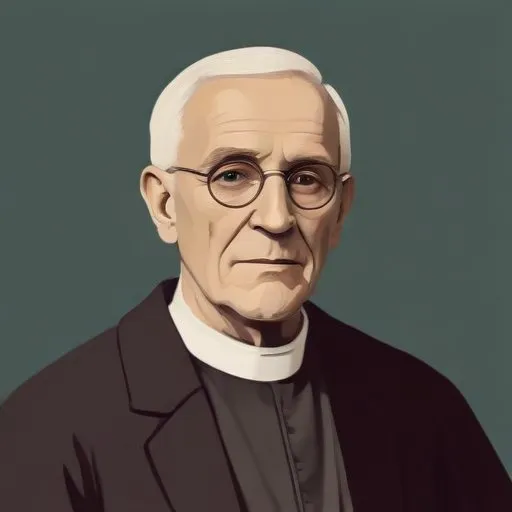
A prominent Episcopal clergyman and theologian who advocated for social justice and ecumenism, leaving a lasting impact on American Christianity.
George Hendric Houghton, a prominent American Protestant Episcopal clergyman, is best known for founding and leading the Church of the Transfiguration, affectionately termed the "Little Church around the Corner" in New York City. This iconic church, established in 1848, would become a testament to Houghton's tireless dedication to benevolent work and his remarkable teaching skills in Hebrew.
Born on February 1, 1820, in Deerfield, Massachusetts, Houghton's commitment to education and the clergy was evident from an early age. He graduated from New York University in 1842 and later from the General Theological Seminary in 1845. His academic achievements and passion for teaching earned him an honorary Doctor of Divinity degree from Columbia College in 1859.
Houghton's greatest legacy is the Church of the Transfiguration, which he founded and led until his death in 1897. This humble church, nestled in the heart of New York City, became a symbol of hope and comfort for the community. The church's nickname "Little Church around the Corner" originated from a poignant story involving actor George Holland's funeral, where Houghton's willingness to conduct the service earned him a special place in the hearts of the people.
Houghton's ministry was characterized by his unwavering commitment to benevolent work and his exceptional teaching skills in Hebrew. He spent his life serving the community, providing solace and guidance to those in need. His expertise in Hebrew made him a sought-after teacher, and his dedication to education earned him recognition from his peers.
Houghton's life was marked by significant milestones, including the establishment of the Church of the Transfiguration and his honorary doctorate from Columbia College. He passed away on November 17, 1897, at the rectory adjoining the church, leaving behind a legacy of service, compassion, and education. He was succeeded by his nephew, George Clarke Houghton, who continued his uncle's work and ensured the Little Church Around the Corner remained a beacon of hope for generations to come.
George Hendric Houghton's contributions to modern society are multifaceted. His dedication to education and benevolent work inspired countless individuals to follow in his footsteps. The Little Church Around the Corner remains a testament to his vision, providing a sense of community and solace to those in need. Houghton's legacy continues to inspire and motivate people to make a positive impact in their own communities.
60 Years Old
A British athlete who won gold at the 2000 Sydney Olympics and held the world triple jump record from 1995 to 2011, earning him a place in the UK Athletics Hall of Fame.
Born in 1813
A prominent abolitionist and women's suffrage advocate, known for his powerful oratory skills and influential writings that helped shape public opinion on social issues.
Born in 1794
A 19th-century educator and politician who served as the 15th Governor of Massachusetts, known for his oratory skills and delivering the main speech at the Gettysburg National Cemetery dedication, overshadowed by Lincoln's Gettysburg Address.
Born in 1803
A leading figure in the Transcendentalist movement, he advocated for individualism, self-reliance, and nature-inspired spirituality through his essays and poetry. His ideas continue to influence American thought and culture.
