


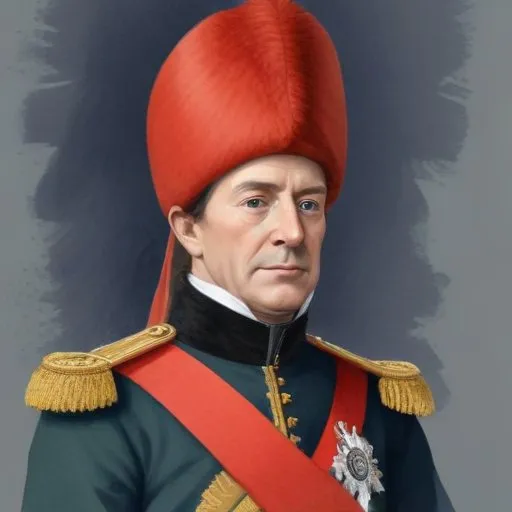
A prominent military leader and politician who served as Lord Lieutenant of Ireland, known for his efforts to maintain British rule and quell Irish rebellions. He played a significant role in shaping Ireland's history during the 18th century.
George Hervey, 2nd Earl of Bristol, is best remembered for his illustrious diplomatic career, which saw him hold pivotal positions in Turin, Madrid, and Ireland, earning him a reputation as a shrewd and dignified envoy. His tenure as ambassador to Spain from 1758 to 1761 was particularly notable, as he navigated the complex web of European alliances during the tumultuous period of the Seven Years' War.
Born on August 3, 1721, George Hervey was the eldest son of John Hervey, 2nd Baron Hervey, and Mary, daughter of Nicholas Lepell. His upbringing was marked by a strong emphasis on education, which laid the foundation for his future success in the diplomatic arena.
Hervey's early career saw him serve in the army, before being sent to Turin as envoy extraordinary in 1755. His diplomatic prowess was soon recognized, and he was appointed ambassador to Spain in 1758, a position he held until 1761. During this period, he demonstrated his ability to maintain cordial relations with the Spanish monarch, while also advancing British interests.
In 1766, Hervey was appointed Lord Lieutenant of Ireland, although he never visited the country during his brief tenure. He subsequently served as keeper of the Privy Seal, before becoming groom of the stool to George III in January 1770.
Hervey's diplomatic career was marked by his ability to navigate complex international relationships, earning him a reputation as a skilled and dignified envoy. His service in Spain, in particular, has been recognized as a highlight of his career, as he successfully balanced British and Spanish interests during a tumultuous period.
While Hervey never married, his personal relationships were marked by a youthful flirtation with Lady Townshend. He died on March 18 or 20, 1775, and was succeeded by his brother.
Hervey's diplomatic career was shaped by the complex web of alliances and rivalries that characterized 18th-century Europe. His service in Spain, in particular, was influenced by the ongoing Seven Years' War, which saw Britain and its allies pitted against France and its allies.
In comparison to his contemporaries, Hervey's diplomatic style was marked by its pragmatism and measured approach. While he was not averse to taking bold action, he was also willing to compromise and negotiate to achieve his goals.
George Hervey, 2nd Earl of Bristol, left an indelible mark on British diplomatic history. His service in Spain and Ireland demonstrated his ability to navigate complex international relationships, and his reputation as a skilled and dignified envoy has endured for centuries.
Born in 1914
A renowned stage and screen actress, known for her versatility and range in various film and theatre productions, earning her a Tony Award and multiple nominations.
Born in 1676
The first Prime Minister of the United Kingdom, serving from 1721 to 1742, known for establishing the office of Prime Minister and setting important precedents for the role. He is also recognized for his skill in managing Parliament and his role in shaping British politics.
Born in 1694
The Prime Minister who led Britain through a period of relative peace and stability, and is often credited with being the first Prime Minister in the modern sense, holding office from 1743 to 1754.
Born in 1683
King of Great Britain and Ireland from 1727 to 1760, known for his military victories, particularly the Battle of Dettingen, and his role in the War of the Austrian Succession.
Born in 1683
King of Great Britain and Ireland from 1727 to 1760, known for his military victories, particularly the Battle of Dettingen, and his role in the War of the Austrian Succession.
