


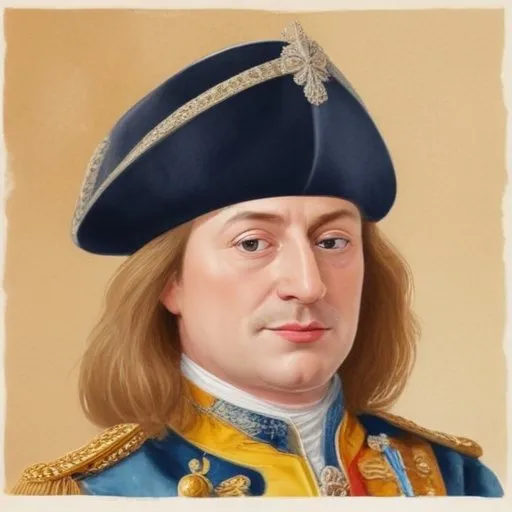
A 16th-century German nobleman who ruled Pomerania and played a significant role in the Protestant Reformation, supporting key figures like Martin Luther. He's also known for his military campaigns against the Teutonic Knights.
George I, Duke of Pomerania, is renowned for his shrewd political maneuvers and his efforts to consolidate power within the House of Griffin. As the eldest son of Duke Bogislaw X of Pomerania, George navigated the complex web of alliances and rivalries within the Holy Roman Empire, ultimately securing a significant treaty with the Elector of Brandenburg.
Born on April 11, 1493, George spent his formative years at the court of his uncle and godfather, Duke Georg the Bearded of Saxony. This exposure to the intricacies of statecraft instilled in him a lifelong appreciation for diplomatic relations and strategic alliances.
Upon ascending to the dukedom in 1523, George devoted himself to limiting the influence of the cities and nobility, while simultaneously pursuing a policy of imperial immediacy within the Holy Roman Empire. This objective was realized through the Treaty of Pyritz in 1493, which granted Pomerania equal rank with Brandenburg.
As the Reformation gained momentum, George walked a tightrope between his personal Catholic convictions and the pragmatic necessities of state. While he failed to suppress the Reformation entirely, he succeeded in steering it onto moderate tracks, ensuring a measure of stability within his territories.
In 1524, George forged an alliance with King Sigismund I of Poland, directed against Brandenburg and Duke Albert of Prussia, as well as the followers of the Reformation.
He participated in the Diet of Worms in 1521 and the Diet of Nuremberg in 1523, further solidifying his position within the imperial framework.
Through his astute diplomacy and calculated risk-taking, George I, Duke of Pomerania, left an indelible mark on the House of Griffin and the broader landscape of the Holy Roman Empire. His pragmatic leadership and ability to navigate complex rivalries continue to inspire historians and scholars to this day.
April 11, 1493: Born in Pomerania
1523: Ascended to the dukedom upon the death of his father, Duke Bogislaw X
1524: Concluded an alliance with King Sigismund I of Poland
May 10, 1531: Passed away, leaving behind a legacy of diplomatic acumen and strategic leadership
Born in 1454
Ruling Pomerania from 1478 to 1523, he unified the duchy, promoted trade, and supported the Hanseatic League, leaving a lasting legacy in the region.
