


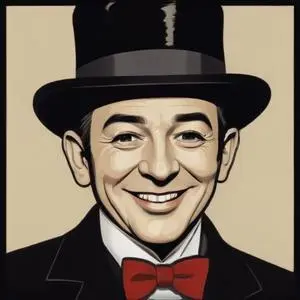
A legendary entertainer who wrote and performed iconic patriotic songs, including "You're a Grand Old Flag" and "Over There," and was a pioneer of American musical theater.
Known as the "man who owned Broadway," George M. Cohan was a legendary American entertainer, playwright, composer, lyricist, actor, singer, dancer, and theatrical producer who dominated the American musical theatre scene in the early 20th century. With a career spanning over four decades, Cohan wrote, composed, produced, and appeared in more than three dozen Broadway musicals, leaving an indelible mark on the industry.
Born on July 3, 1878, in Providence, Rhode Island, to Irish Catholic parents, Cohan was destined for stardom. He began performing at a young age, joining his parents' vaudeville act, "The Four Cohans," as a child. Cohan's earliest performances were as a prop, but he soon learned to dance and sing, making his debut as a violinist at age 8 and later transitioning to dance.
Cohan's breakthrough came with the 1904 musical "Little Johnny Jones," which he wrote, composed, and starred in. The show's success propelled him to fame, and he went on to create over 50 shows, publishing more than 300 songs, including iconic hits like "Over There," "Give My Regards to Broadway," "The Yankee Doodle Boy," and "You're a Grand Old Flag."
Cohan's impact on American musical theatre was profound. He was one of the early members of the American Society of Composers, Authors, and Publishers (ASCAP) and was instrumental in shaping the genre of musical comedy. His works often incorporated patriotic themes, and his music reflected the spirit of America during World War I.
In the 1930s, Cohan transitioned to film, appearing in several movies, including the 1942 biographical film "Yankee Doodle Dandy," which starred James Cagney as Cohan. He continued to perform as a headline artist until 1940, displaying remarkable theatrical longevity.
Cohan's contributions to American musical theatre were recognized with a statue in Times Square, New York City. He was also honored with an Academy Award for "Yankee Doodle Dandy," and a 1968 musical, "George M.," was written in tribute to his life and work.
Cohan believed in the power of music and entertainment to bring people together and uplift the human spirit. His patriotic songs and musicals reflected his love for America and its values, inspiring generations of Americans during times of war and peace.
George M. Cohan's legacy extends beyond the world of musical theatre. His music and shows continue to inspire new generations of artists, and his contributions to American popular culture are undeniable. He remains an icon of American entertainment, and his spirit continues to resonate with audiences today.
Born in 1888
A legendary composer and pianist who wrote over 1,500 songs, including iconic American standards like "God Bless America" and "White Christmas", shaping the Great American Songbook.
Born in 1891
A legendary composer and songwriter behind timeless Broadway shows and Hollywood musicals, crafting witty, sophisticated, and romantic songs that have become jazz standards.
Born in 1902
Pioneering creator of iconic American musicals, blending music, dance, and drama to craft timeless classics like Oklahoma! and The Sound of Music.
Born in 1846
A successful cigar manufacturer and opera composer, he founded the Manhattan Opera Company, which rivaled the Metropolitan Opera, and wrote operas like "Nora" and "Dream City".
Born in 1895
Wrote witty, romantic, and poignant lyrics for Broadway musicals, collaborating with Richard Rodgers to create iconic shows like Oklahoma! and South Pacific. 42
Born in 1885
Pioneering composer of musical theater, crafting iconic songs and scores that blended jazz, opera, and popular music, shaping the American musical landscape.
Born in 1909
Co-founder of Capitol Records, a legendary singer-songwriter, and producer who penned iconic hits like "Moon River" and "Days of Wine and Roses", leaving an indelible mark on American popular music.
Born in 1905
Iconic composer of timeless classics like "Over the Rainbow" and "Get Happy", crafting unforgettable melodies that evoke emotions and transport listeners to a bygone era.
