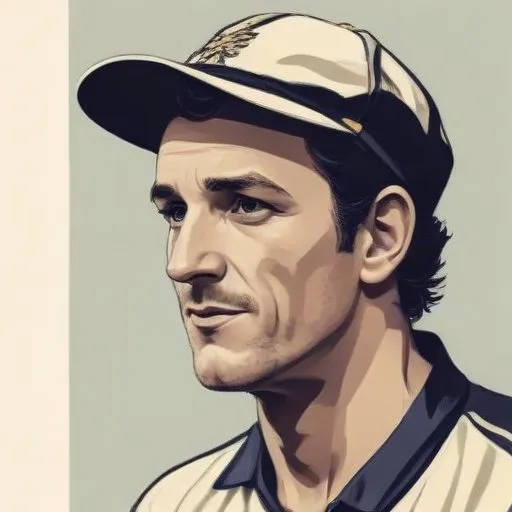
George Mann: The Cricketing Icon and War Hero
A Legendary Career on the Pitch
George Mann is renowned for his exceptional cricketing skills, having played for Cambridge University, Middlesex, and England, showcasing his prowess as a right-handed middle-order batsman. What sets him apart is the distinction of being the second father-son duo, after his father Frank Mann, to captain England, a feat only matched by Colin and Chris Cowdrey.
Early Life and Education
Born on September 6, 1917, in Byfleet, Surrey, England, George Mann was the son of Frank Mann and brother of John Pelham Mann. He received his education at Eton College, where he captained the school's cricket XI in 1936 and was also a member of the Eton College Contingent of the Officer Training Corps, achieving the rank of cadet underofficer. He later studied at Pembroke College, Cambridge, graduating with a Bachelor of Arts degree. During his time at Cambridge, he earned two cricketing blues, representing the university in 1938 and 1939.
Military Service and Honors
George Mann's service in the British Army during World War II is a testament to his bravery and dedication. He was commissioned in the Royal Welch Fusiliers as a second lieutenant on July 8, 1939, and later transferred to the Scots Guards on March 13, 1940. His valor was recognized with the award of the Military Cross (MC) in 1942. On June 28, 1945, he was awarded the Distinguished Service Order (DSO) for his gallant and distinguished services in Italy. Mann maintained his links with the army after the war, eventually resigning his commission on September 6, 1967, and was permitted to retain his honorary rank of major.
Cricketing Achievements
Mann's cricketing career was marked by several milestones, including captaining England in seven Test matches, with two wins and five draws. His leadership skills and batting prowess made him a formidable force on the pitch.
Legacy and Impact
George Mann's contributions to cricket and his military service have left an indelible mark on history. As a cricketer, he inspired generations with his skill and dedication. As a war hero, he demonstrated courage and bravery in the face of adversity. His legacy continues to inspire and motivate others, serving as a testament to the values of sportsmanship, leadership, and service to one's country.
Awards and Honors
- Military Cross (MC) in 1942
- Distinguished Service Order (DSO) in 1945
- Honorary rank of major in the British Army
Personal Life and Timeline
- Born: September 6, 1917, in Byfleet, Surrey, England
- Passed away: August 8, 2001, in Stockcross, Berkshire, England
George Mann's remarkable life is a testament to his character, dedication, and passion for cricket and service. His legacy continues to inspire future generations, ensuring his place in the annals of cricketing history.
FAQ
What were George Manns cricketing achievements?
George Mann was a renowned English cricketer who made his debut in 1925 and went on to play 21 Test matches, scoring over 1,000 runs. He was also an accomplished batsman, averaging 23.51 in his Test career.
Where did George Mann play cricket?
George Mann played cricket for several teams, including Kent County Cricket Club, Oxford University Cricket Club, and the English national team. He was known for his performances on the English cricket circuit.
What was George Manns role in the cricket team?
George Mann was a talented right-handed batsman and a right-arm medium-pace bowler. He batted in the middle order and was often called upon to stabilize the innings.
Did George Mann have any notable cricketing awards?
George Mann was awarded the Wisden Cricketer of the Year in 1926, a prestigious honor given to outstanding cricketers.
What was George Manns impact on English cricket?
George Mann was an influential figure in English cricket during the 1920s and 1930s, inspiring a generation of cricketers with his batting skills and sportsmanship.