


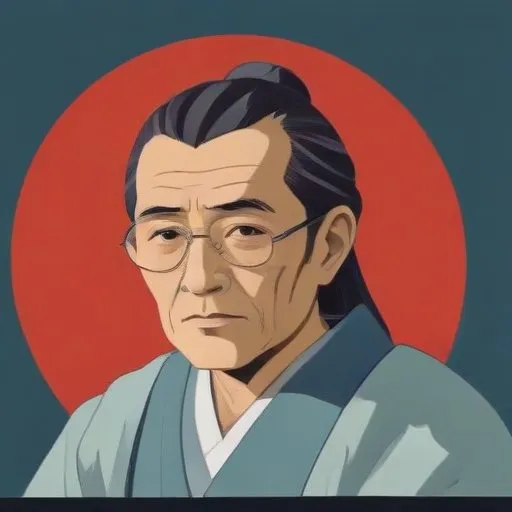
Developed the macrobiotic diet and philosophy, which emphasizes whole grains, vegetables, and a balanced lifestyle to achieve spiritual and physical harmony.
George Ohsawa, also known as Nyoichi Sakurazawa, was a Japanese author and proponent of alternative medicine who founded the macrobiotic diet. Through his teachings and writings, Ohsawa spread the concept of macrobiotics, a holistic approach to health that emphasizes whole foods, natural living, and a balanced lifestyle.
Born on October 18, 1893, in Shingu City, Wakayama Prefecture, Japan, Ohsawa grew up in a poor samurai family. Despite the lack of resources for higher education, Ohsawa's curiosity and determination led him to join the Shokuiku movement in 1913, where he studied under Manabu Nishibata, a direct disciple of Dr. Sagen Ishizuka.
Ohsawa's journey into macrobiotics began when he cured himself of tuberculosis at the age of 19 by applying the ancient Chinese concept of yin and yang, as well as the teachings of Dr. Ishizuka. This experience sparked his passion for promoting health and wellness through natural means. He went on to write over 300 books in Japanese and 20 in French, spreading his teachings on macrobiotics across the globe.
Ohsawa defined health based on seven criteria:
His philosophy emphasized the importance of living in harmony with nature, consuming whole and organic foods, and adopting a balanced lifestyle. Ohsawa believed that health and wellness were not just physical, but also spiritual and emotional.
Ohsawa's teachings have had a profound impact on modern society, inspiring a new wave of health-conscious individuals to adopt a more holistic approach to wellness. His ideas have influenced countless people, including celebrities, artists, and entrepreneurs, to re-evaluate their relationship with food and their bodies.
Ohsawa's notable works include "Zen Macrobiotics" and "The Unique Principle," which outline his teachings on macrobiotics and its applications to daily life. He also founded the Macrobiotic Institute in France, where he taught and shared his knowledge with students from around the world.
Ohsawa's unorthodox approach to health and wellness has sparked controversy and criticism from the medical establishment. However, his dedicated followers and students have testified to the efficacy of his teachings, citing improved health and well-being as a result of adopting a macrobiotic lifestyle.
George Ohsawa's legacy continues to inspire and educate people around the world. His teachings have paved the way for a new generation of health enthusiasts, entrepreneurs, and wellness professionals. As a pioneer of macrobiotics, Ohsawa's work has left an indelible mark on the world of health and wellness, promoting a more holistic and balanced approach to living.
"Health is not just a physical condition, but a spiritual and emotional state of being."
"The universe is not a collection of separate things, but a continuum of interconnected relationships."
"Food is not just something we eat, but a reflection of our relationship with the natural world."
George Ohsawa's life's work serves as a testament to the power of determination, curiosity, and passion. His teachings continue to inspire and educate, promoting a more holistic and balanced approach to health and wellness. As we reflect on his legacy, we are reminded of the importance of living in harmony with nature and honoring our bodies as sacred vessels for life.
