


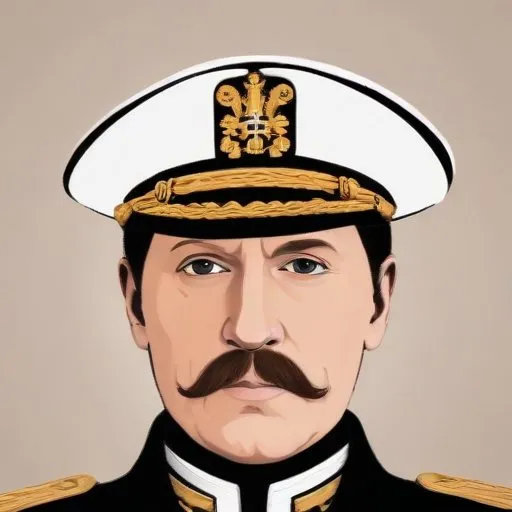
An 18th-century British naval officer who played a crucial role in the Seven Years' War and American Revolutionary War, known for his victories and tactical innovations.
George Pocock, a prominent British officer of the Royal Navy, is renowned for his exemplary service and commendable achievements, which had a profound impact on the naval forces in the East Indies during the 18th century. As a skilled commander, he played a pivotal role in shaping the course of British naval history, earning him a reputation as one of the most distinguished admirals of his time.
Born on March 6, 1706, in Thames Ditton, Surrey, George Pocock was the son of Thomas Pocock, a chaplain in the Royal Navy. His ancestors had a long history of residing in Brightwalton, Berkshire, and his great-grandfather, Rev. Dr. Laurence Pocock, was the Rector of Brightwalton.
Pocock embarked on his naval career in 1718, serving aboard the HMS Superb under the patronage of his maternal uncle, Captain Streynsham Master. He swiftly rose through the ranks, becoming a lieutenant in April 1725 and commander in 1733. In 1738, he was promoted to post-captain and granted command of the 20-gun HMS Aldborough.
In 1754, Pocock was sent to join the Commander-in-Chief, East Indies, Rear-Admiral Charles Watson, as captain of the 58-gun HMS Cumberland. Watson's squadron cooperated with Clive in the conquest of Bengal. Following Watson's death in 1757, Pocock took command of the naval forces in the East Indies, a position that would cement his reputation as a skilled and strategic leader.
During his tenure as commander, Pocock faced off against the French naval force, led by Comte d'Aché, in a series of battles. Despite being outnumbered, Pocock's tactical prowess and bravery led to several victories, including the Battle of Cuddalore in 1758 and the Battle of Pondicherry in 1759. These triumphs secured British dominance in the East Indies and earned Pocock promotion to vice-admiral in 1756.
In recognition of his outstanding service, Pocock was knighted in 1757 and created a Knight of the Bath in 1761. He was also elected a Fellow of the Royal Society in 1763, a testament to his intellectual curiosity and contributions to the field of naval science.
George Pocock's remarkable career had a profound impact on the development of British naval power, particularly in the East Indies. His strategic prowess, bravery, and leadership skills inspired a generation of naval officers, cementing his place as one of the most influential admirals in British history.
Pocock's legacy extends beyond his military achievements, as he played a significant role in shaping the British East India Company's policies and operations in the region. His contributions to the field of naval science and his commitment to the development of British naval power have left an indelible mark on the annals of naval history.
Little is known about Pocock's personal life, but it is recorded that he married and had children. His great-grandson, Sir George Pocock, was a renowned naval officer who served during the French Revolutionary and Napoleonic Wars.
George Pocock passed away on April 3, 1792, leaving behind a legacy of distinction, courage, and leadership that continues to inspire naval officers and historians alike.
66 Years Old
A renowned jockey and trainer, he won numerous prestigious races, including the Epsom Derby and St. Leger Stakes, and was known for his exceptional riding skills and innovative training methods.
