


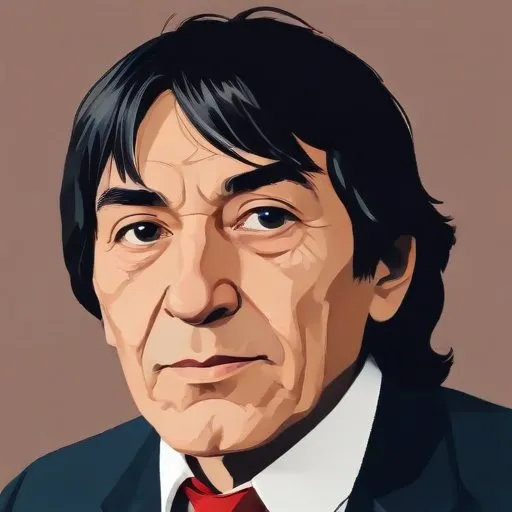
Georgi Markov, a Bulgarian novelist, screenwriter, and playwright, is best known for his daring criticism of the Bulgarian-Soviet regime, which ultimately led to his assassination on a London street in 1978. Through his writings and broadcasts, Markov relentlessly exposed the regime's atrocities, making him a thorn in the side of the communist authorities.
Markov was born on March 1, 1929, in Knyazhevo, a Sofia neighborhood. He graduated from the Gymnasium high school in 1946 and went on to study industrial chemistry at university. Initially, he worked as a chemical engineer and teacher, but his literary ambitions soon took over. His first literary attempts began during his convalescence from tuberculosis, which he contracted at the age of 19.
In 1969, Markov defected to the West, leaving behind his established career in Bulgaria. He settled in London, where he began working as a broadcaster and journalist for the BBC World Service, Radio Free Europe, and Deutsche Welle. From these platforms, Markov launched a scathing critique of the Bulgarian-Soviet regime, which he believed was corrupt and oppressive.
On September 11, 1978, Markov's life was tragically cut short. While walking across Waterloo Bridge in London, he was stabbed in the leg with an umbrella, which delivered a poisoned pellet, believed to contain ricin. The attack was orchestrated by the Bulgarian Secret Service, with the assistance of the Soviet KGB. Markov's wife, Annabel, recalled the incident, saying, "He felt a jab in his thigh. He looked around, and there was a man behind him who'd apologized and dropped an umbrella."
Markov's courageous stand against the regime has made him a hero in the eyes of many. His writing and broadcasts inspired a generation of Bulgarians to question the communist authority. His assassination served as a stark reminder of the regime's brutality and further galvanized opposition to the communist regime.
Markov's writing often reflected his deep-seated distrust of totalitarian ideologies. He believed in the power of free speech and the importance of holding those in power accountable. Through his work, he demonstrated a commitment to democratic values and human rights.
"The truth is, I am not a dissident. I am just a writer who wants to tell the truth."
Through his life and work, Georgi Markov left an indelible mark on the world of literature and politics. His bravery in the face of oppression continues to inspire generations, serving as a powerful reminder of the importance of free speech and the need to challenge authoritarian regimes.
44 Years Old
A Cuban wrestler who won three Olympic medals, including two golds, and is considered one of the greatest wrestlers in Cuban history.
