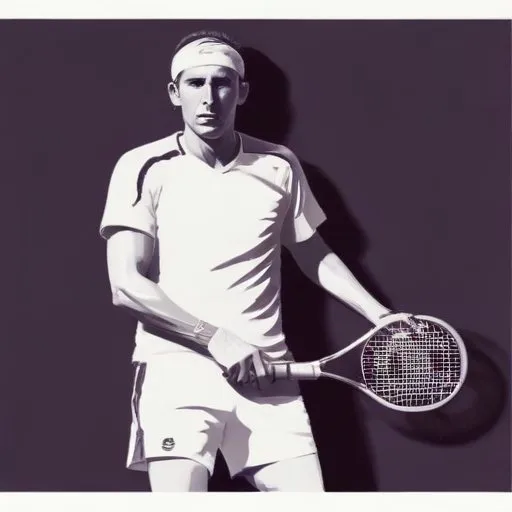
Gerald Patterson: The Tennis Legend of the Roaring Twenties
A Grand Slam Champion and Pioneer of the Game
Gerald Patterson, born on December 17, 1895, in Melbourne, Australia, was a tennis sensation of the post-World War I era, leaving an indelible mark on the sport. This Australian tennis player, known for his incredible serve-and-volley game, won three Grand Slam tournaments in singles and six titles in doubles competitions, cementing his status as one of the greatest players of his time.
The Early Years and Rise to Prominence
Educated at Scotch College and Trinity Grammar School, Patterson's tennis career began to take shape in the early 1900s. His impressive skills on the court quickly earned him recognition, and he rose to prominence in the tennis world during the decade following World War I. In 1919, he was ranked as the co-World No. 1 player, alongside
Bill Johnston, marking the beginning of his reign as a tennis legend.
A Trailblazer on the Court
Patterson's playing style was characterized by his powerful serve, earning him the nickname "The Human Catapult." This trait, combined with his exceptional volleying skills, made him a formidable opponent on the court. He was also known for his innovative approach to the game, being one of the first players to experiment with steel racquets strung with wire, a pioneering move that would later become the norm.
Grand Slam Success and Davis Cup Dominance
Patterson's impressive record includes winning three Grand Slam tournaments in singles: the Wimbledon title in 1919, 1922, and the Australian Open in 1927. He also secured six doubles titles, including three Australian Open doubles championships. Moreover, he was an integral part of Australia's Davis Cup success, amassing a remarkable 32-14 win-loss record (21-10 in singles and 11-4 in doubles) and leading the team to victory in 1919.
Personal Life and Legacy
Off the court, Patterson's life was marked by notable personal connections. He was the nephew of renowned Australian opera singer Dame
Nellie Melba and the father of racing driver Bill Patterson. During World War I, he demonstrated bravery and was awarded the Military Cross for his conspicuous gallantry and devotion to duty.
Awards and Recognition
Patterson's contributions to tennis have been recognized and celebrated posthumously. He was inducted into the Sport Australia Home of Fame in 1986, the International Tennis Hall of Fame in 1989, and the Australian Tennis Hall of Fame in 1997.
A Lasting Impact on Tennis
Gerald Patterson's legacy extends beyond his impressive playing record. He was a trailblazer who pushed the boundaries of the game, introducing innovative techniques and equipment that paved the way for future tennis greats. His impact on the sport, both on and off the court, has cemented his status as one of the most celebrated tennis players of the 20th century.
FAQ
What was Gerald Pattersons tennis career like?
Gerald Patterson had a successful tennis career, winning several championships and representing Australia in international competitions.
What Grand Slam titles did Gerald Patterson win?
Gerald Patterson won several Grand Slam titles, including the 1927 Australian Open and the 1914 Wimbledon doubles championship.
What awards did Gerald Patterson win for his tennis achievements?
Gerald Patterson won several awards for his tennis achievements, including the Australian Tennis Hall of Fame induction in 1997.
What was Gerald Pattersons playing style like?
Gerald Patterson was known for his aggressive playing style, which emphasized powerful serves and volleys.
What legacy did Gerald Patterson leave behind?
Gerald Patterson left behind a legacy as one of Australias greatest tennis players. His achievements on the court inspired generations of tennis players and helped to establish Australia as a tennis powerhouse.