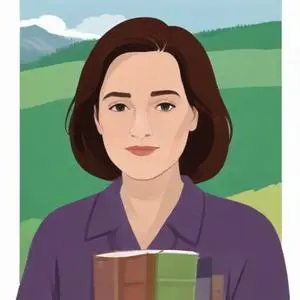
Geraldine Brooks: The Pulitzer Prize-Winning Novelist and Journalist
A Life of Storytelling and Adventure
Geraldine Brooks is best known for her 2005 novel
March, which won the Pulitzer Prize for Fiction, but her life's work extends far beyond this incredible achievement. As a renowned journalist and novelist, Brooks has spent her career exploring the human experience through her writing, taking readers on a journey across the globe and into the depths of the human heart.
A Childhood of Curiosity
Born in Sydney, Australia on September 14, 1955, Brooks grew up in the inner-west suburb of Ashfield. Her father, Lawrie Brooks, was an American big-band singer who settled in Australia after his manager absconded with the band's pay. Her mother, Gloria, was a public relations officer with radio station 2GB in Sydney. This unique blend of Australian and American heritage would later influence Brooks' writing, which often explores the complexities of identity and culture.
From Journalism to Fiction
After graduating from the University of Sydney, Brooks began her journalism career as a rookie reporter for
The Sydney Morning Herald. She then won a Greg Shackleton Memorial Scholarship, which led her to pursue a master's degree at New York City's Columbia University Graduate School of Journalism in 1983. As a foreign correspondent for
The Wall Street Journal, Brooks covered crises in Africa, the Balkans, and the Middle East, earning the Overseas Press Club's Hal Boyle Award for Best Newspaper or Wire Service Reporting from Abroad in 1990.
Award-Winning Writing
Brooks' first book,
Nine Parts of Desire (1994), was an international bestseller, translated into 17 languages. This non-fiction work was based on her experiences among Muslim women in the Middle East and explored the complexities of women's lives in Islamic societies. Her second book,
Foreign Correspondence (1997), was a memoir and travel adventure that won the Nita Kibble Literary Award for women's writing.
Novels and Historical Fiction
Brooks' first novel,
Year of Wonders (2001), became an international bestseller and marked a significant shift in her writing career. This historical fiction novel told the story of a young girl's struggle to survive the plague in 17th-century England.
March (2005), her second novel, won the Pulitzer Prize for Fiction and reimagined
Louisa May Alcott's
Little Women from the perspective of the absent father, Mr. March.
Awards and Honors
- Pulitzer Prize for Fiction (2006) for March
- Overseas Press Club's Hal Boyle Award for Best Newspaper or Wire Service Reporting from Abroad (1990)
- Nita Kibble Literary Award for women's writing (1997) for Foreign Correspondence
- Fellowship at Harvard University's Radcliffe Institute for Advanced Study (2006)
A Life of Storytelling and Exploration
Throughout her career, Brooks has been driven by a passion for storytelling and a desire to explore the human experience. Her writing has taken readers on a journey across continents and into the depths of the human heart. As a Pulitzer Prize-winning novelist and journalist, Brooks continues to inspire and captivate audiences around the world.
FAQ
What is Geraldine Brooks literary genre?
Geraldine Brooks literary genre is historical fiction, although she has also written nonfiction and journalism.
What novel won Geraldine Brooks the Pulitzer Prize?
Geraldine Brooks won the Pulitzer Prize for Fiction in 2006 for her novel March, a retelling of Louisa May Alcotts Little Women from the perspective of the absent father.
How does Geraldine Brooks approach historical fiction?
Geraldine Brooks approaches historical fiction by extensively researching the time period and incorporating historical figures and events into her narratives.
What themes does Geraldine Brooks typically explore in her writing?
Geraldine Brooks typically explores themes of family, identity, war, and social justice in her writing, often drawing on her experiences as a journalist and her interest in history.
What has Geraldine Brooks said about the power of storytelling?
Geraldine Brooks has stated that she believes storytelling has the power to connect people across cultures and generations, and to help us understand and empathize with others.