


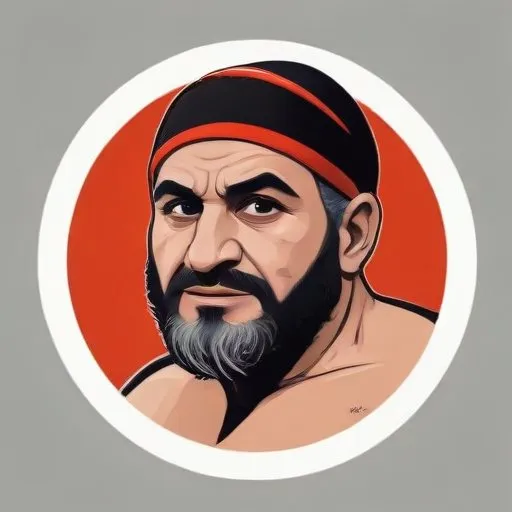
A celebrated wrestler and politician, he won Olympic and World Championship medals, and later became a symbol of resistance against the Shah's regime, inspiring a nation.
Gholamreza Takhti is revered as one of the greatest Iranian freestyle wrestlers of all time, boasting an impressive repertoire of accolades, including a gold medal at the 1956 Summer Olympics, three-time Pahlevan of Iran, and a member of the UWW Hall of Fame.
Takhti's remarkable journey began in Tehran's Khaniabad neighborhood, where he was born to a poor family on August 27, 1930. Despite the financial struggles, Takhti's innate passion for wrestling led him to join Poulad Club at the tender age of 15. His potential was soon recognized, and he left Tehran to work as a manual laborer in Masjed Soleiman, nurturing his wrestling skills in his spare time.
Upon being recruited as an Iran Railways employee in 1948, Takhti's wrestling career gained momentum. He won his first Iranian championship in 1950, followed by a silver medal at the world freestyle championships in Helsinki the following year – the first international medal ever won by an Iranian wrestler.
Takhti's prowess on the mat earned him a spot at the 1952 Summer Olympic Games, where he secured another silver medal. This set the stage for his most iconic achievements: gold medals at the 1956 Summer Olympic Games, the 1959 World Championships in Tehran, and the 1961 World Championships in Yokohama.
Takhti's sportsmanship and chivalrous behavior, embodied in the Iranian concept of Javanmardi, earned him the nickname "Jahn Pahlevan" or "The World Champion." His conduct on and off the mat inspired a generation of Iranian athletes, solidifying his status as a national hero.
Takhti's life was marked by his dedication to wrestling and his country. He was called up for military service, where his potential was discovered, and later worked as an Iran Railways employee, allowing him to pursue his passion for wrestling.
Gholamreza Takhti's legacy extends beyond the realm of sports. He remains an iconic figure in Iranian culture, symbolizing the values of hard work, discipline, and sportsmanship. His impact on modern society is a testament to the transformative power of sports, inspiring future generations to strive for greatness.
In conclusion, Gholamreza Takhti's remarkable career serves as a beacon of inspiration, demonstrating the heights that can be reached through dedication, perseverance, and a commitment to excellence. His enduring legacy continues to captivate and motivate, solidifying his place as one of the greatest Iranian athletes of all time.
