


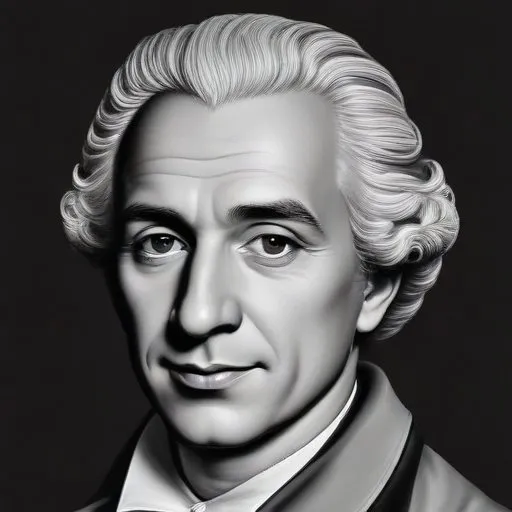
A renowned publisher and engraver who revolutionized typography with his iconic serif font designs, still widely used in modern printing and digital media today.
Giambattista Bodoni, a renowned Italian typographer, type designer, compositor, printer, and publisher, is celebrated for his groundbreaking contributions to the world of typography. His innovative designs and technological advancements in typecasting have had a profound impact on the development of modern fonts, earning him a revered place in the history of typography.
Born on February 16, 1740, in Saluzzo, Kingdom of Sardinia (now Italy), Bodoni was exposed to the world of typography from a young age. His father, a printer and publisher, instilled in him a passion for typography, which would eventually become his life's work.
Bodoni's early influences included the works of Pierre Simon Fournier, a French typographer, and John Baskerville, an English typefounder. He was particularly drawn to their innovative approaches to typography, which emphasized elegance, clarity, and precision.
In the late 18th century, Bodoni revolutionized typography with his designs of pseudoclassical typefaces, characterized by their stark contrast between thick and thin lines. This distinctive style, which became known as "Modern," redefined the aesthetic of typography and paved the way for future generations of typographers.
Bodoni's work was marked by an unprecedented level of technical refinement, allowing him to produce fonts with extremely thin hairlines and precise spacing. This enabled him to create beautifully composed pages with an unparalleled level of subtlety.
Bodoni's contributions to typography extended far beyond his designs. He was a master compositor, able to arrange type with remarkable precision and elegance. His printing reflected an aesthetic of plain, unadorned style, combined with a focus on material purity.
His work attracted many admirers and imitators, including prominent typographers such as Firmin Didot. Bodoni's influence can be seen in many modern fonts, including those used in publishing, advertising, and digital media.
Despite his many achievements, Bodoni's work was not without controversy. Some critics, including William Morris, felt that his emphasis on technical perfection resulted in fonts that seemed cold and inhumane.
However, Bodoni's defenders argued that his dedication to precision and elegance elevated typography to an art form, allowing readers to focus on the content rather than the presentation.
Today, Bodoni's legacy can be seen in the many modern fonts that bear his name. His designs continue to inspire typographers, graphic designers, and artists around the world.
His influence extends beyond the world of typography, with his emphasis on precision, elegance, and simplicity influencing design and art in general.
Bodoni's remarkable contributions to typography have left an indelible mark on the world of design and art. His innovative spirit, technical genius, and dedication to elegance and precision have earned him a place among the greatest typographers of all time.
Born in 1466
Renowned for inventing the first movable-type printing press for music, revolutionizing music publishing and making it more accessible. This innovation enabled mass production of sheet music, democratizing music education and performance.
Born in 1902
A renowned graphic designer and typographer who revolutionized modern typography with his sans-serif fonts and innovative book designs. His work greatly influenced the development of modern graphic design.
Born in 1918
A renowned typographer and calligrapher who designed iconic fonts like Palatino, Optima, and Zapfino, revolutionizing typography and visual communication. Their work has had a lasting impact on the world of design and publishing.
