


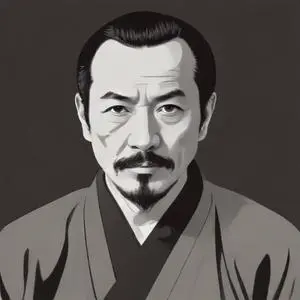
Founded the style of Shotokan karate, a highly influential and widely practiced form of martial arts, and is often referred to as the "Father of Modern Karate."
Gichin Funakoshi is widely recognized as the founder of Shotokan karate, a style that has become synonymous with the sport. He is also known as the "father of modern karate" for his instrumental role in introducing karate to the Japanese mainland and popularizing it worldwide.
Born on November 10, 1868, in Shuri, Okinawa, Funakoshi was born prematurely to a Ryukyu Pechin family of samurai lineage. His father, Gisu, was a vassal of the Ryukyu Dynasty nobles. Funakoshi's early education was marked by a strong emphasis on classical Chinese and Japanese philosophies and teachings.
Funakoshi's introduction to karate came through his close friendship with the son of Ank Asato, a karate and Jigenryu master. Asato would soon become Funakoshi's first karate teacher, and their nightly training sessions would lay the foundation for Funakoshi's future success.
Funakoshi trained in both Shorin-ryu and Shorian-ryu, the two popular styles of Okinawan karate at the time. However, it was his development of Shotokan karate that would cement his legacy. Shotokan is named after Funakoshi's pen name, "Shoto," which means "waving pines." The name "Kan" means "training hall" or "school."
Funakoshi introduced karate to the Japanese mainland in 1922, and his teachings were soon in high demand. He taught karate at various Japanese universities and became the honorary head of the Japan Karate Association upon its establishment in 1949. His son, Gigō Funakoshi, is widely credited with developing the foundation of the modern Shotokan style.
Beyond his physical teachings, Funakoshi was also a prolific poet and philosopher. His writings often explored the connection between karate and Zen Buddhism, emphasizing the importance of discipline, self-control, and spiritual growth.
Funakoshi's impact on modern society extends far beyond the confines of the karate dojo. His philosophy of discipline, self-control, and respect has inspired countless individuals around the world. His legacy continues to influence modern karate, martial arts, and physical education.
Funakoshi's life and teachings coincided with a period of significant cultural and social change in Japan. His introduction of karate to the mainland helped to popularize the sport, and his emphasis on discipline and self-control resonated with a nation rebuilding itself after World War II.
Funakoshi's remarkable life and teachings have left an indelible mark on the world of karate and beyond. As the "father of modern karate," his legacy continues to inspire and influence generations of martial artists and philosophers alike.
Born in 1870
A pioneer of Okinawan karate, he introduced and popularized the martial art in Japan, establishing the first karate club at Tokyo University. He's also known for his unique fighting style, which emphasized individual expression and adaptability.
