


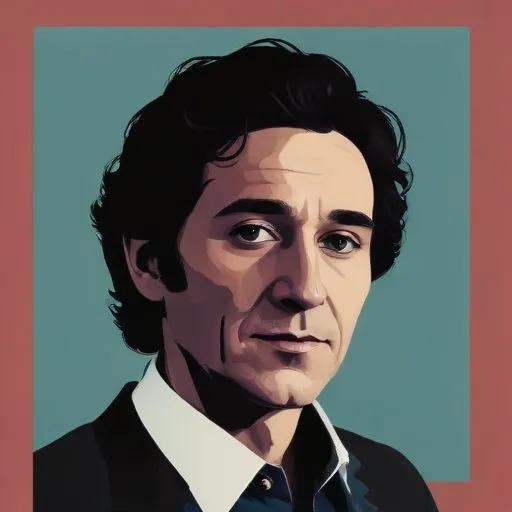
A renowned singer-songwriter and poet celebrated for his poignant lyrics and soothing melodies that capture the essence of Quebec's cultural heritage. His works often explore themes of love, nature, and social justice.
Gilles Vigneault, a Canadian poet, publisher, singer-songwriter, and Quebec nationalist, is renowned for penning two of Quebec's unofficial anthems, "Mon pays" and "Gens du pays". His iconic line, "Mon pays, ce n'est pas un pays, c'est l'hiver" ("My country is not a country, it is winter"), has become a proverb in Quebec, resonating deeply with the province's cultural identity.
Gilles Vigneault was born on October 27, 1928, in Natashquan, Quebec, in the Côte-Nord region. His early interest in poetry led him to start writing during his studies at the seminary in Rimouski. By the 1950s, he was publishing poems and writing songs for other performers.
In 1959, Vigneault founded the publishing house Les Éditions de l'Arc, which allowed him to distribute his own publications. The same year, he released his first collection, "Traverses", marking the beginning of his literary career.
Vigneault made his singing debut at the L'Arlequin club in Quebec City in 1960, followed by a successful Montreal concert later that year. In 1962, he recorded his first album, "Gilles Vigneault", which earned him the Grand Prix du Disque from Montreal radio station CKAC.
Vigneault's reputation as a songwriter and performer continued to spread, gaining him popularity not only in Quebec but also in English Canada and Europe. He performed in major Canadian concert halls, including Montreal's Place des Arts, the National Arts Centre in Ottawa, and Toronto's Massey Hall.
His song "Mon Pays" from the 1965 NFB film soundtrack "The Snow Has Melted on the Manicouagan" solidified his position as a prominent figure in Quebec's cultural scene. The song's success propelled Vigneault to international recognition, with tours in France, Switzerland, Poland, Belgium, and Luxembourg.
Gilles Vigneault has received numerous accolades for his contributions to Quebec's cultural heritage. He is a Grand Officer of the National Order of Quebec, Knight of the Legion of Honour, and Officer of the Ordre des Arts et des Lettres.
Vigneault's work has had a profound impact on Quebec's cultural identity, shaping the province's sense of self and community. His poetry and music have inspired generations of Quebecers, solidifying his position as a national treasure.
Through his work, Vigneault has championed the cause of Quebec nationalism and sovereignty, providing a powerful voice for the province's unique cultural and linguistic identity.
On August 13, 1974, Vigneault participated in the Superfrancofête, a historic event that brought together 130,000 spectators on the Plains of Abraham. This event marked a pivotal moment in Quebec's cultural and linguistic struggle for recognition.
Vigneault's work is characterized by a deep sense of nationalism and a strong attachment to his Quebecois roots. His poetry and music reflect his belief in the importance of preserving and promoting the French language and culture in Quebec.
Through his art, Vigneault has conveyed a message of hope, resilience, and dignity, inspiring generations of Quebecers to reclaim their cultural heritage and assert their unique identity.
Gilles Vigneault's impact on modern society extends beyond the realm of music and literature. He has influenced Quebec's cultural landscape, shaping the province's sense of identity and community.
Vigneault's message of cultural preservation and linguistic pride has resonated with Quebecers, inspiring a new generation of artists, writers, and musicians to celebrate and promote the province's unique cultural heritage.
"Mon pays, ce n'est pas un pays, c'est l'hiver."
("My country is not a country, it is winter.")
This iconic line, from his song "Mon Pays", has become a symbol of Quebec's cultural identity, capturing the essence of the province's unique history and heritage.
Gilles Vigneault's work is deeply rooted in Quebec's rich cultural heritage, drawing inspiration from the province's history, literature, and music. His legacy continues to inspire new generations of artists, writers, and musicians, ensuring the preservation and promotion of Quebec's unique cultural identity.
Vigneault's impact on Quebec's cultural landscape is immeasurable, solidifying his position as a national hero and a champion of Quebec's linguistic and cultural heritage.
92 Years Old
A poet and singer-songwriter renowned for his soulful, literary lyrics and distinctive, soothing voice, crafting timeless classics that explore love, spirituality, and the human condition.
Born in 1914
A Quebec cultural icon, known for his poignant folk songs and poetry that captured the essence of French-Canadian identity, leaving a lasting impact on the country's music and literature scene.
Born in 1922
A charismatic leader who championed Quebec's independence and shaped the province's distinct identity through his passionate politics and journalism. He's revered for his role in Quebec's Quiet Revolution.
Born in 1919
The charismatic leader who championed Canadian unity and implemented progressive policies, known for his iconic style and influential legacy in shaping modern Canada.
92 Years Old
The 20th Prime Minister of Canada, serving from 1993 to 2003, known for his leadership during the Quebec sovereignty movement and his role in shaping Canada's national unity. He implemented policies like the Clarity Act and the National Child Benefit.
99 Years Old
A Canadian billionaire who built a business empire through investments and acquisitions, and is also recognized for his philanthropic efforts in education and healthcare.
82 Years Old
A Quebecois cultural icon, known for blending folk, rock, and French-Canadian music, creating a unique sound that resonates with generations. He's a beloved artist, actor, and cultural ambassador.
