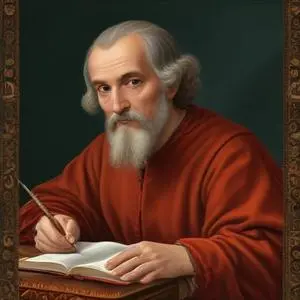
Giovanni Pico della Mirandola: The Renaissance Philosopher Who Challenged the Status Quo
A Visionary Who Defied Convention
Giovanni Pico della Mirandola is renowned for his bold and unprecedented attempt to defend 900 theses on religion, philosophy, natural philosophy, and magic in 1486, at the tender age of 23. This fearless endeavor, culminating in the iconic "Oration on the Dignity of Man," cemented his reputation as a champion of humanism and a pioneering figure of the Renaissance.
A Life of Noble Pursuits
Born on February 24, 1463, in Mirandola, near Modena, Italy, Giovanni was the youngest son of Gianfrancesco I Pico, Lord of Mirandola and Count of Concordia. His family's rich heritage and connections to prominent dynasties, such as the Sforza, Gonzaga, and Este, afforded him access to a rich cultural and intellectual tapestry.
The 900 Theses: A Revolutionary Work
The 900 Theses, a comprehensive compendium of philosophical, theological, and magical ideas, was Pico's magnum opus. This ambitious undertaking aimed to reconcile disparate intellectual traditions, asserting the inherent dignity and potential of human beings. In doing so, Pico della Mirandola boldly challenged the authority of the Church and kindled a spark that would ignite the Renaissance humanist movement.
Christian Kabbalah and Hermetic Reformation
Pico's work laid the groundwork for Christian Kabbalah, a synthesis of Jewish mysticism and Christian theology. This esoteric tradition, which emphasized the unity of all knowledge and the potential for human transformation, would go on to influence prominent thinkers and occultists.
Philosophical Contributions and Beliefs
- Pico della Mirandola espoused a holistic worldview, integrating Platonic, Aristotelian, and Hermetic philosophies.
- He advocated for the concept of "synderesis," or the innate human capacity for moral judgment and spiritual growth.
- His philosophical approach emphasized the agency and creativity of human beings, as outlined in the "Oration on the Dignity of Man."
Influence on Modern Society
Pico della Mirandola's ideas have had a lasting impact on Western thought, informing the development of:
- Humanism and the Renaissance artistic and cultural revival
- Esoteric traditions, including Christian Kabbalah and Hermeticism
- The Protestant Reformation, with Pico's ideas anticipating key Protestant tenets
Personal Milestones and Key Life Events
- 1486: Pico della Mirandola proposed to defend his 900 theses, leading to the "Oration on the Dignity of Man."
- 1488: He was imprisoned for his alleged heresy, but later released and rehabilitated.
- 1494: Pico died on November 17, at the age of 31, due to poisoning, likely orchestrated by his enemies.
Legacy and Impact on Their Field
Giovanni Pico della Mirandola's groundbreaking work has left an indelible mark on philosophy, theology, and esotericism. His courageous pursuit of knowledge, synthesis of disparate traditions, and emphasis on human potential have inspired countless thinkers, artists, and spiritual seekers, cementing his status as a Renaissance visionary.
FAQ
What was Giovanni Pico della Mirandolas philosophical contribution?
Giovanni Pico della Mirandola was an Italian philosopher and humanist who made significant contributions to the development of Renaissance humanism and the concept of Renaissance Man.
What was Giovanni Pico della Mirandolas Oration on the Dignity of Man?
Giovanni Pico della Mirandolas Oration on the Dignity of Man is a famous philosophical text that argues for the potential of human beings to achieve great things through education, virtue, and individual effort.
How did Giovanni Pico della Mirandolas work influence the Renaissance?
Giovanni Pico della Mirandolas work had a profound influence on the Renaissance, inspiring thinkers such as Erasmus and Thomas More, and shaping the cultural and intellectual landscape of the time.
What was Giovanni Pico della Mirandolas view on magic and the occult?
Giovanni Pico della Mirandola was interested in magic and the occult, and wrote several works on the subject, including De hominis dignitate and Heptaplus.
How did Giovanni Pico della Mirandolas life reflect his philosophical ideas?
Giovanni Pico della Mirandolas life reflected his philosophical ideas, as he embodied the Renaissance ideal of the Universal Man, pursuing knowledge and wisdom in various fields, from philosophy to literature and art.