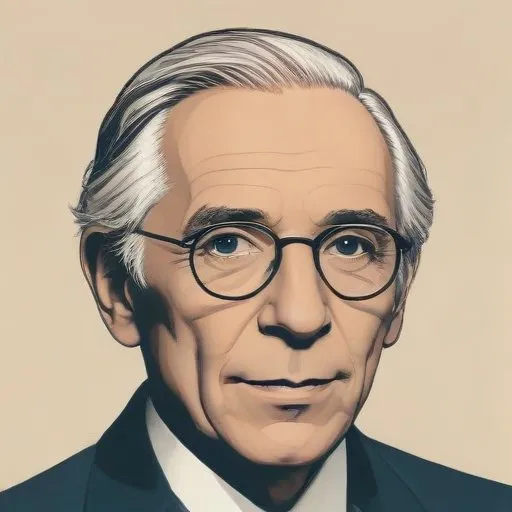
Godfrey Stafford: A Pioneering Physicist and Visionary Leader
A Legacy of Excellence in High Energy Physics
Godfrey Stafford is renowned for his groundbreaking contributions to high energy physics, particularly in the development of the Rutherford Appleton Laboratories, which he directed from 1969 to 1981. During his tenure, he oversaw the construction of the Nimrod synchrotron, a pioneering accelerator that propelled the field of high energy physics forward.
Early Life and Education
Born on April 15, 1920, in England, Godfrey Stafford spent his formative years in South Africa, where he developed a passion for physics. He attended the University of Cape Town, graduating top of his class and subsequently earning his MSc in cosmic rays in 1941. After serving in the South African Naval Forces during World War II, Stafford pursued his Ph.D. at Gonville and Caius College, Cambridge, graduating in 1950.
Career Highlights and Major Works
Stafford's illustrious career is marked by several milestones:
- Head of the Biophysics SubDivision, South African Council for Scientific and Industrial Research (1950-1954)
- Member of the Cyclotron Group at Harwell (1954-1957)
- Head of the Proton Linear Accelerator (PLA) Group at the Rutherford Laboratory (1957-1963)
- Deputy Director of the Rutherford Laboratory (1966-1969)
- Director of the Rutherford Appleton Laboratories (1969-1981)
- Master of St Cross College, Oxford (1981-1988)
- President of the Institute of Physics (1988-1991)
Influence on Modern Society
Godfrey Stafford's work has had a profound impact on modern society, driving innovation in various fields:
- Advancements in high energy physics have led to breakthroughs in medical imaging, cancer treatment, and materials science.
- His leadership in the development of the Rutherford Appleton Laboratories has enabled cutting-edge research in particle physics, nuclear physics, and astronomy.
- Collaborations with CERN have facilitated the formation of the European Physical Society, fostering a unified community of physicists across Europe.
Personal Milestones and Key Life Events
Godfrey Stafford's personal life is marked by significant events:
- Marriage to Helen Goldthorp Clark, an Australian biologist, in 1950
- Father of a son and twin daughters
- Resided near Oxford, maintaining a strong connection to the academic community
Historical Context and Legacy
Godfrey Stafford's contributions to high energy physics have left an indelible mark on the scientific community. His visionary leadership and groundbreaking research have paved the way for future generations of physicists, cementing his legacy as a pioneer in the field.
FAQ
What was Godfrey Staffords area of expertise?
Godfrey Stafford was an expert in nuclear physics and radiation protection. He conducted extensive research in these areas and published numerous papers.
What awards did Godfrey Stafford receive for his work?
Godfrey Stafford received several awards for his contributions to nuclear physics and radiation protection, including the prestigious ICRP Award.
What was Godfrey Staffords role in international organizations?
Godfrey Stafford played a key role in several international organizations, including the International Commission on Radiological Protection and the International Atomic Energy Agency.
How did Godfrey Staffords work impact the field of nuclear physics?
Godfrey Staffords work had a significant impact on the field of nuclear physics, shaping our understanding of radiation protection and safety standards.
What legacy did Godfrey Stafford leave behind?
Godfrey Stafford left behind a legacy of contributing to the advancement of nuclear physics and radiation protection, improving our understanding of the field and informing policy and practice.