


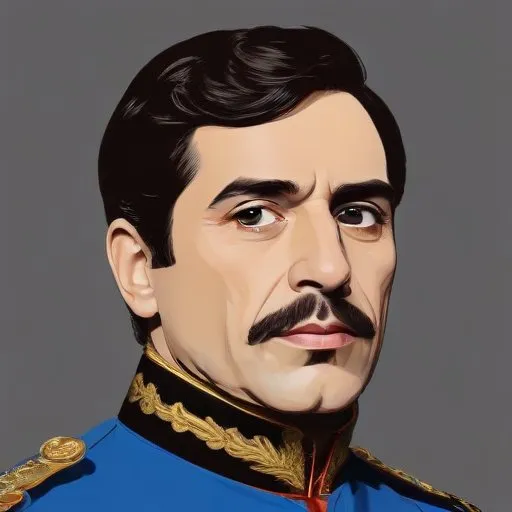
A renowned Spanish general who led successful military campaigns in Italy, earning the nickname "The Great Captain" for his innovative tactics and victories. He's most known for his conquests in Naples and Sicily.
Gonzalo Fernández de Córdoba, known as "El Gran Capitán" (The Great Captain), was a Spanish general and statesman who led successful military campaigns during the Conquest of Granada and the Italian Wars, earning him widespread popularity and recognition as one of the most esteemed military leaders of his time.
Fernández de Córdoba's military victories were accompanied by significant strategic innovations that transformed the Spanish army into a dominant force in Europe for over a century and a half. He was among the first Europeans to introduce the successful use of firearms on the battlefield and reorganized the infantry to incorporate pikes and firearms in effective defensive and offensive formations.
Fernández de Córdoba's military success and diplomatic prowess earned him international recognition and respect. He maintained active relationships with the crowns of Castile and Aragon, as well as with France, the Papal States, the Italian city-states, and the Holy Roman Empire, all of which sought his services.
According to chronicler Jernimo Zurita, Fernández de Córdoba was "the most esteemed person that lived in these times, for such princes, either desired to have him for a friend, or were wary that he might become their enemy."
Gonzalo Fernández de Córdoba was born on September 1, 1453, at Montilla in the province of Córdoba. He was the younger son of Pedro Fernández de Córdoba, Count of Aguilar, and Elvira de Herrera. In 1455, when Fernández de Córdoba was just two years old, his father passed away.
His older brother, Alonso, inherited all of their father's titles and properties, leaving Fernández de Córdoba to forge his own path in life.
Fernández de Córdoba's military and diplomatic achievements have had a lasting impact on European history. His strategic innovations and military victories shaped the course of the Spanish army, while his diplomatic prowess earned him international recognition and respect.
Today, Fernández de Córdoba is remembered as one of the most esteemed and influential military leaders of his time, and his legacy continues to inspire military strategists and historians alike.
Fernández de Córdoba's numerous titles and honors are a testament to his exceptional military and diplomatic achievements, cementing his place as one of the most revered figures of the Spanish Renaissance.
Born in 1380
Unified the Crown of Aragon, ruling over a vast territory in eastern Spain, and sponsored the voyages of Christopher Columbus, leading to the discovery of the New World.
Born in 1451
Unified the Spanish kingdoms, sponsored Christopher Columbus's voyage to the Americas, and established the Spanish Inquisition.
