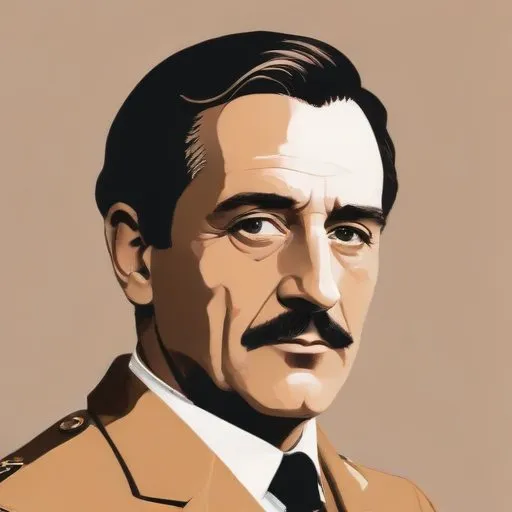
Granville Elliott

Granville Elliott

Granville Elliott was born on October 7th, 1713

Full Name: Granville Elliott
Occupation: General, Politician
Birthplace: London, England
Death: 1759
Nationality: English
Military Service: British Army
War Participation: War of the Austrian Succession
Governor: Gibraltar

A British Army officer who served in the French Revolutionary and Napoleonic Wars, earning distinction for his bravery and tactical prowess. He later became a prominent figure in British politics.

Granville Elliott: A Pioneering Military Figure of the 18th Century

Granville Elliott, 1st Count Elliott, was a distinguished British military officer who made significant contributions to various European armies and the British Army, earning him recognition for his bravery and tactical prowess. He is particularly known for his remarkable service at the Battle of Minden, where he was gravely wounded and later succumbed to his injuries.

Early Life and Education

Born on September 7, 1713, at Byfeld House, Church Road, Barnes, Surrey, Granville Elliott was the son of Major-General Roger Elliott and his wife Charlotte née Elliot. He was baptized on October 27, 1713, at St. Mary the Virgins Church, Barnes, with esteemed godparents, George Granville, 1st Baron Lansdowne, and Mrs. Killigrew. After his father's early demise, Elliott's mother remarried Captain Thomas Burroughs, and he was later made a ward of his maternal uncle, Colonel William Elliot.

Elliott's education commenced at Dr. Dunster's Academy in Little Marlborough Street, London, in 1725. He then pursued law studies at the University of Groningen in the Netherlands in 1730, laying the foundation for his future military career.

Continental European Military Career

By 1732, Elliott had enlisted in the service of HM Karl Philipp von Pfalz-Neuburg, Elector Palatine of the Rhine. Prior to his marriage to Jeanne Thérèse du Han, Comtesse de Martigny, on March 15, 1735, he was appointed Chamberlain to his Majesty Charles VI and elevated to the title of Comte de Morhange in the Moselle region. This appointment prompted his conversion to Catholicism, and he adopted the forename Joseph, which would later create tension with his Calvinist relatives.

Military Achievements and Legacy

Elliott's military prowess was showcased during the Battle of Minden, where he fought valiantly despite being wounded. His bravery and leadership earned him recognition, but unfortunately, he succumbed to his injuries several weeks later.

Elliott's military career was marked by his service in various European armies and the British Army, demonstrating his adaptability and strategic thinking. His legacy serves as a testament to his unwavering dedication to his country and the military.

Influence on Modern Society

Granville Elliott's contributions to the military and his participation in significant battles have had a lasting impact on modern society. His bravery and sacrifice have inspired generations of military personnel, and his legacy continues to be felt in the military circles.

Moreover, Elliott's experiences and achievements have contributed to the development of military strategies and tactics, influencing the course of future battles and conflicts.

Personal Milestones and Key Life Events

Granville Elliott's life and legacy serve as a testament to his unwavering dedication to his country and the military. His bravery, strategic thinking, and contributions to the development of military strategies have left an indelible mark on modern society.

Timeline
1713
Born in London
Granville Elliott was born in London, England. He would go on to become a prominent English general and military leader.
1736
Joined the British Army
Elliott joined the British Army, where he quickly rose through the ranks due to his bravery and strategic thinking.
1758
Fought in the Seven Years War
Elliott fought in the Seven Years War, distinguishing himself in several key battles and earning a reputation as a skilled military leader.
1763
Became Governor of Gibraltar
Elliott was appointed Governor of Gibraltar, where he oversaw the defense of the strategic territory against Spanish and French threats.
1770
Died in Gibraltar
Granville Elliott died in Gibraltar, leaving behind a legacy as a skilled and courageous military leader who served the British Crown with distinction.
Granville Elliott

Granville Elliott Quiz

What war did Granville Elliott serve in?

Score: 0/5
FAQ
What military campaigns did Granville Elliott fight in?
Granville Elliott fought in several military campaigns, including the French Revolutionary Wars and the Napoleonic Wars. He served with distinction in battles such as the Battle of Salamanca and the Battle of Vittoria.
What was Granville Elliotts role in the Peninsular War?
Granville Elliott played a significant role in the Peninsular War, where he served under the command of the Duke of Wellington. He was instrumental in several key battles and was praised for his bravery and tactical skills.
How did Granville Elliott rise through the ranks of the British Army?
Granville Elliott rose through the ranks of the British Army quickly, thanks to his bravery, military prowess, and strategic thinking. He was promoted to the rank of general and became one of the most respected military leaders of his time.
What honors did Granville Elliott receive for his military service?
Granville Elliott received several honors for his military service, including the Knight Commander of the Order of the Bath (KCB) and the Knight Grand Cross of the Order of the Bath (GCB). He was also awarded several foreign honors, including the Spanish Order of Charles III.
What is Granville Elliotts legacy in British military history?
Granville Elliotts legacy in British military history is that of a brilliant and courageous military leader who played a key role in several important battles and campaigns. He is remembered as one of the most capable and distinguished generals of his time.