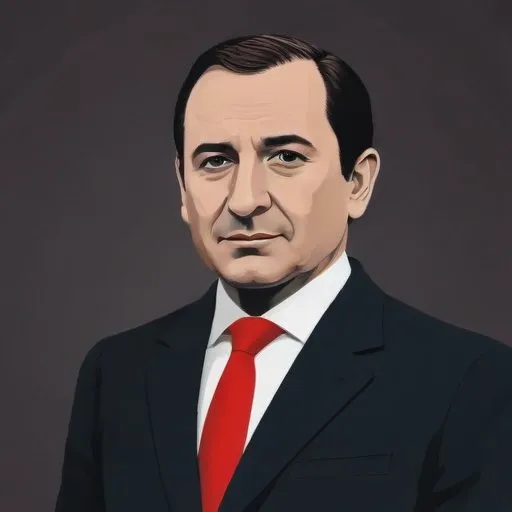
Grigol Mgaloblishvili: A Georgian Politician and Diplomat of Distinction
A Brief Overview
Grigol Mgaloblishvili is a renowned Georgian politician and diplomat, best known for serving as the Prime Minister of Georgia from November 2008 to February 2009, as well as the country's Permanent Representative to NATO since June 2009. Throughout his illustrious career, Mgaloblishvili has made significant contributions to Georgia's political and diplomatic landscape.
Early Life and Education
Born on October 7, 1973, in Tbilisi, Georgia (then part of the Soviet Union), Mgaloblishvili hails from an academic family. He is a polyglot, speaking Georgian, English, Turkish, Russian, and German fluently.
Rise to Prominence
Mgaloblishvili's diplomatic career began as the Georgian Ambassador to Turkey, a position he held until October 2008. It was during this time that President
Mikheil Saakashvili proposed him as the Prime Minister of Georgia to the Parliament of Georgia. On November 1, 2008, he was approved as the Prime Minister, marking a significant milestone in his career.
Turbulent Tenure as Prime Minister
Mgaloblishvili's term as Prime Minister was marred by controversy, with rumors circulating about a rift between him and President Saakashvili. In December 2008, Russian media reported an alleged incident where Saakashvili punched Mgaloblishvili and threw a telephone at him. However, both Mgaloblishvili and Saakashvili denied the allegations, dismissing them as "ridiculous" and "rumors."
Resignation and New Chapter as NATO Representative
Citing health problems, Mgaloblishvili resigned as Prime Minister on February 6, 2009. Two months later, he was approved as Georgia's Permanent Representative to NATO, a position he continues to hold to this day.
Career Highlights and Achievements
- Served as the Prime Minister of Georgia (2008-2009)
- Georgia's Permanent Representative to NATO (2009-present)
- Georgian Ambassador to Turkey (until 2008)
Legacy and Impact
Throughout his career, Mgaloblishvili has navigated the complexities of Georgian politics and diplomacy, playing a crucial role in shaping the country's relationships with international organizations and nations. Despite facing challenges and controversies, he remains a respected figure in Georgian politics, known for his linguistic skills, diplomatic acumen, and commitment to public service.
Personal Milestones and Key Life Events
- Born on October 7, 1973, in Tbilisi, Georgia
- Appointed as Georgian Ambassador to Turkey (until 2008)
- Became Prime Minister of Georgia (2008-2009)
- Approved as Georgia's Permanent Representative to NATO (2009)
By examining Mgaloblishvili's life and career, we gain insight into the complexities of Georgian politics and the importance of diplomacy in international relations. His legacy serves as a testament to the power of dedication, perseverance, and public service.
FAQ
What was Grigol Mgaloblishvilis role in Georgian politics?
Grigol Mgaloblishvili served as the 7th Prime Minister of Georgia from 2008 to 2009, leading the country through a period of political and economic reform.
What were Grigol Mgaloblishvilis achievements as Prime Minister?
Grigol Mgaloblishvilis achievements as Prime Minister include implementing economic reforms, improving relations with the European Union, and promoting Georgias integration into international organizations.
What was Grigol Mgaloblishvilis background before entering politics?
Grigol Mgaloblishvili was a career diplomat, serving as Georgias Ambassador to Turkey and Russia before entering politics and becoming Prime Minister.
How did Grigol Mgaloblishvilis leadership style affect Georgian politics?
Grigol Mgaloblishvilis leadership style was characterized by a pragmatic approach to politics, focusing on economic development and international cooperation, which helped to stabilize Georgia during a period of political turmoil.
What is Grigol Mgaloblishvilis legacy in Georgian politics?
Grigol Mgaloblishvili is remembered as a key figure in Georgian politics, having played a crucial role in the countrys transition to democracy and its integration into the international community.