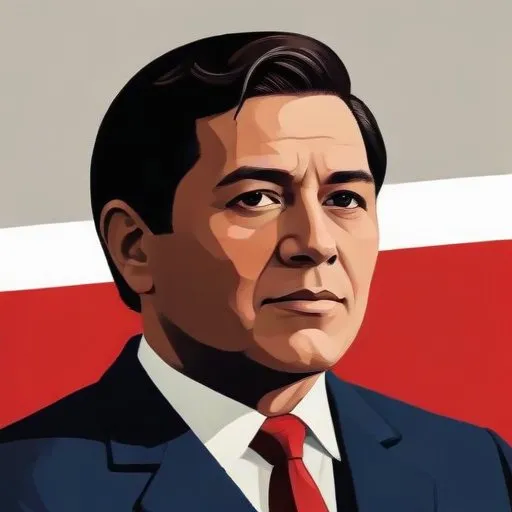
Guillermo Endara: The Unwavering Leader Who Brought Democracy to Panama
A Brief Introduction to a Turbulent Life
Guillermo Endara, the former President of Panama, is famously known for his fearless opposition to the
Manuel Noriega military dictatorship and his pivotal role in bringing democracy to the country. From 1989 to 1994, Endara served as the President of Panama, navigating the nation through a tumultuous period of political transformation.
A Childhood Marked by Exile and Political Upheaval
Born on May 12, 1936, in Panama City, Panama, Endara's childhood was marked by exile and political upheaval. His family, closely allied with Panameista Party founder Arnulfo Arias, was forced to flee to the United States and Argentina after Arias's removal from power. This experience would shape Endara's future and fuel his determination to fight for democracy.
A Law Degree and a Career in Politics
Endara returned to Panama to pursue a law degree, which he obtained in 1963. His entry into politics was swift, and he soon became a member of Panama's National Assembly. Endara's political career was marked by periods of exile, first in 1968 and again in 1972, as he faced persecution for his anti-government stance.
The Fight Against Noriega's Dictatorship
After Arnulfo Arias's death in 1988, Endara emerged as a leading opponent of Manuel Noriega's military dictatorship. He headed the opposition coalition in the 1989 presidential election, which was annulled by the government. The international community was outraged, and Endara's brave stance helped build support within the United States for military action against Noriega.
The U.S. Invasion and Ascension to the Presidency
On December 20, 1989, the United States invaded Panama, and Endara was sworn in as the new President on the first night of the invasion on a U.S. military base. This moment marked a turning point in Panama's history, as Endara became the first democratically elected President in over 20 years.
Reforms and Challenges
During his presidency, Endara implemented significant reforms, including the abolition of the Panamanian military and its replacement with a national police force. He also worked to rebuild democratic institutions and promote economic growth. However, his administration faced internal fighting, and high unemployment rates plagued the country.
Late Life and Legacy
Endara ran for office again in 2004 and 2009 but lost to opposition candidates. He passed away on September 28, 2009, at the age of 73, leaving behind a legacy of courage and determination. Guillermo Endara's unwavering commitment to democracy will forever be etched in Panama's history.
Personal Milestones and Key Life Events
- Born on May 12, 1936, in Panama City, Panama
- Family forced into exile in the United States and Argentina in 1941
- Obtained a law degree in Panama in 1963
- Member of Panama's National Assembly
- Headed the opposition coalition in the 1989 presidential election
- Sworn in as President of Panama on December 20, 1989
- Lost presidential elections in 2004 and 2009
- Passed away on September 28, 2009, at the age of 73
Philosophical Contributions and Beliefs
Endara's commitment to democracy and human rights was unwavering. He believed in the power of the people and fought tirelessly to bring freedom and justice to Panama. His legacy serves as a beacon of hope for generations to come.
FAQ
What role did Guillermo Endara play in Panamanian politics?
Guillermo Endara was the 32nd President of Panama, serving from 1989 to 1994. During his presidency, he implemented various economic and political reforms, including the countrys transition to democracy.
What were Guillermo Endaras accomplishments as President of Panama?
Some of Guillermo Endaras notable accomplishments as President of Panama include re-establishing democratic institutions, promoting economic growth, and improving relations with the United States.
How did Guillermo Endaras presidency impact Panamas economy?
Guillermo Endaras presidency had a significant impact on Panamas economy, as he implemented policies to stimulate growth, attract foreign investment, and reduce poverty.
What were the challenges faced by Guillermo Endara during his presidency?
During his presidency, Guillermo Endara faced various challenges, including rebuilding the country after the US invasion, addressing economic instability, and dealing with the legacy of Manuel Noriegas regime.
What is Guillermo Endaras legacy in Panama?
Guillermo Endaras legacy in Panama is that of a champion of democracy and economic reform. He is remembered for his role in leading the country towards democracy and stability after a period of authoritarian rule.