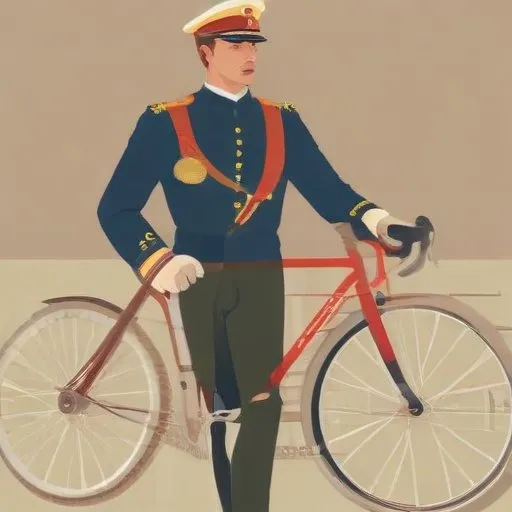
Gustaaf Deloor: The Unsung Hero of Cycling
A Legacy of Triumph and Resilience
Gustaaf Deloor, a Belgian road racing cyclist, etched his name in the annals of history by emerging victorious in the first two editions of the Vuelta a España in 1935 and 1936. This remarkable feat solidified his status as a pioneer in the world of professional cycling, with his 1936 win remaining the longest winning finish time of the Vuelta to this day.
Rise to Prominence
Deloor's professional career spanned from 1932 to 1939, during which he left an indelible mark on the sport. His most notable achievement came in 1936, when he completed the 22-stage, 4,407-kilometer route in an astonishing 150 hours, 7 minutes, and 54 seconds. What made this victory even more remarkable was that his older brother, Alfons, finished second overall, making it a truly family affair.
War and Captivity: A Setback and a New Beginning
Deloor's promising career was interrupted by the outbreak of World War II. While serving in the Belgian army, he was taken prisoner by the German army in 1940 and held captive in Stalag IIB. A German officer's interest in sports led to Deloor being assigned kitchen duties, which proved to be a blessing in disguise. After the war, Deloor returned to find his home plundered and decided to start anew in the United States, settling in New York in 1949.
A New Chapter: From Mechanic to Aerospace Engineer
Deloor's American sojourn marked a significant turning point in his life. He worked as a mechanic for several years before an affluent client helped him secure a job at Cape Canaveral aerospace center in 1956. This opportunity led to his involvement with the Marquardt Corporation, a renowned aeronautical engineering firm, where he played a crucial role in the development and design of the ramjet engine for NASA's Apollo 11 Saturn V rocket.
Personal Life and Later Years
Deloor's personal life was marked by both joy and tragedy. He lost his first wife in 1966 but remarried, and in 1980, he returned to his native Belgium. Despite the challenges he faced, Deloor remained a pillar of strength and resilience, leaving behind a legacy that continues to inspire generations of cyclists and beyond.
Major Results and Accolades
- Winner of the first two editions of the Vuelta a España (1935, 1936)
- Held the record for the longest winning finish time of the Vuelta (1936)
- Contributed to the development and design of the ramjet engine for NASA's Apollo 11 Saturn V rocket
Legacy and Impact
Gustaaf Deloor's remarkable journey serves as a testament to the human spirit's capacity for perseverance and reinvention. His remarkable achievements in the world of professional cycling, combined with his later contributions to the field of aerospace engineering, have left an indelible mark on history. As a trailblazer and a true pioneer, Deloor's legacy continues to inspire and motivate individuals from all walks of life.
FAQ
What was Gustaaf Deloors greatest cycling achievement?
Gustaaf Deloors greatest cycling achievement was winning the inaugural Vuelta a España in 1935, which he won again in 1936.
How did Gustaaf Deloors cycling career span?
Gustaaf Deloors cycling career spanned from 1933 to 1947, during which he won numerous races and competed in the Tour de France.
What was Gustaaf Deloors profession outside of cycling?
Gustaaf Deloor was a soldier before and during World War II, and later became a sports director and coach.
What was Gustaaf Deloors impact on Belgian cycling?
Gustaaf Deloor was a pioneering figure in Belgian cycling, inspiring a generation of cyclists with his achievements and contributions to the sport.
How is Gustaaf Deloor remembered today?
Gustaaf Deloor is remembered as one of the greatest Belgian cyclists of all time, with a legacy that continues to inspire cyclists and fans around the world.