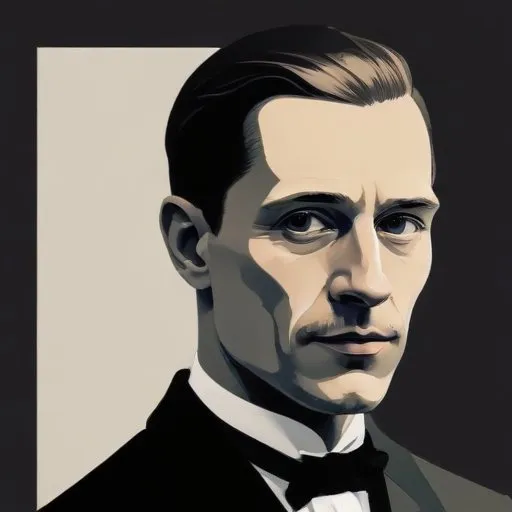
Gustaf Cederström: The Swedish Master of Historical Scenes
A Brush with History
Gustaf Cederström, a Swedish painter, is renowned for his vivid historical scenes and striking portraits that transport viewers to a bygone era. With a passion for history ignited at a young age, Cederström's artistry brought the past to life, earning him recognition and accolades in the art world.
Early Life and Inspiration
Born in 1845, Cederström was influenced by his naval officer father, Carl Emanuel Cederström, and his mother, Theresine, an amateur painter. His interest in history was sparked by the discovery of an ancestor who participated in the Skirmish at Bender. Initially, Cederström considered following in his father's footsteps, enrolling in the infantry regiment in Värmland as an underlöjtnant in 1864. However, his artistic inclinations soon took precedence, and he began taking art classes at the Royal Swedish Academy of Fine Arts.
The Artistic Journey
Cederström's decision to resign his military commission in 1870 marked the beginning of his artistic career. He went on to study under Ferdinand Fagerlin in Düsseldorf and Léon Bonnat in Paris, where he settled in 1873. The Exposition Universelle in 1878 brought him his first major success, with his romanticized scene depicting the body of King Karl XII being carried home. This work earned him a medal and was purchased by Russian Grand Duke Konstantin, later returning to Sweden after the Russian Revolution and currently displayed at the Goteborgs konstmuseum.
Awards and Recognition
- 1878: Elected a member of the Royal Academy
- 1887: Appointed Professor at the Academy
- 1899-1911: Served as Director of the Academy
Personal Milestones
Cederström married Amalia Katarina Jaeder in 1878, and their daughter, Carola (1878-1954), also became a painter. His literary prowess is evident in his autobiography,
En gammal konstnärs minnen (An Old Artist's Memories), published in 1926, and
Gammalt och nytt (Old and New) in 1929.
Legacy and Impact
Cederström's artistic contributions to the world of historical scenes and portraits have left an indelible mark. His ability to capture the essence of a bygone era has inspired generations of artists and art enthusiasts alike. As a painter, author, and educator, Gustaf Cederström's legacy continues to influence the art world, ensuring his place as one of Sweden's most revered artists.
Notable Works
- The body of King Karl XII being carried home (1878)
- Historical scenes for the Royal Dramatic Theatre (1906)
Philosophical Contributions
Cederström's art embodies his deep appreciation for history and his desire to preserve the past for future generations. His commitment to accuracy and attention to detail in his historical scenes have set a high standard for artists seeking to capture the essence of bygone eras.
FAQ
What were Gustaf Cederströms contributions to Swedish art?
Gustaf Cederström was a prominent Swedish painter, known for his portraits and historical scenes. He was a key figure in the development of Swedish art, influencing the countrys artistic style and direction.
What was Gustaf Cederströms role in the Swedish Art Association?
Gustaf Cederström was a founding member of the Swedish Art Association, an organization dedicated to promoting Swedish art and artists. He played a crucial role in shaping the countrys artistic landscape.
What were Gustaf Cederströms early life and education?
Gustaf Cederström was born in 1845 in Stockholm, Sweden. He studied art at the Royal Swedish Academy of Arts and later became a successful painter and teacher.
How did Gustaf Cederström influence Swedish culture?
Gustaf Cederströms paintings had a significant impact on Swedish culture, capturing the countrys history and identity. His work remains an important part of Swedens artistic heritage, continues to be celebrated and studied.
What was Gustaf Cederströms legacy after his death?
After his death, Gustaf Cederströms work continued to be exhibited and celebrated, cementing his place as one of Swedens greatest painters. His legacy extends beyond art, influencing Swedish culture and identity.