


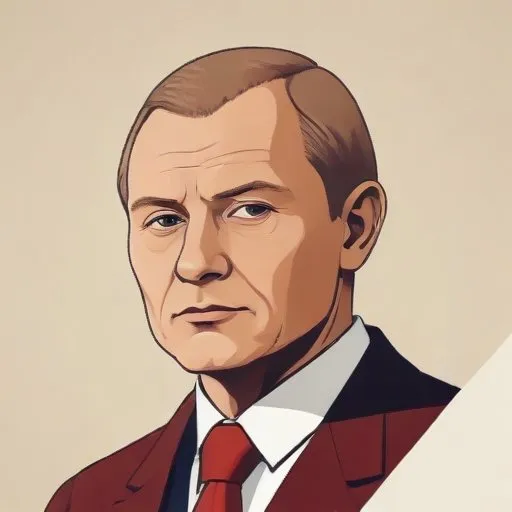
A prominent figure in Latvia's struggle for independence, he was a key player in the country's transition to democracy and served as the Minister of Foreign Affairs. He's known for his diplomatic efforts to secure international recognition for Latvia's independence.
Gustavs Celmi was a Latvian politician and founder of the ultranationalist organization Prkonkrusts, known for its anti-German, anti-Slavic, and anti-Semitic ideologies. Throughout his career, Celmi advocated for a radical reorganization of society, politics, and economy in Latvia, often taking extreme measures to achieve his goals.
Celmi was born on April 1, 1899, and educated at the commerce school of the Riga Stock Exchange. He later attended the Riga Polytechnical Institute, which had been evacuated to Moscow, where he graduated in 1917.
In 1918, Celmi enlisted in the newly created Latvian Army, where he quickly rose through the ranks, earning the title of lieutenant in 1919. He was subsequently appointed as the Latvian military attaché in Poland and awarded the Order of Lāčplēsis in 1921.
In 1932, Celmi founded the Latvian nationalist group Ugunskrusts, which advocated for a national revolution in Latvia. After Ugunskrusts was banned, Celmi established Prkonkrusts, an ultranationalist organization that shared similar ideologies. Both organizations sought to radically reorganize society, politics, and the economy in Latvia.
Following the 1934 Latvian coup d'état, Celmi was arrested and imprisoned for three years. He was later exiled from Latvia in 1937 and moved to Italy, then Switzerland, where he was arrested and banished. Celmi eventually settled in Romania, where he had contacts with the Iron Guard, and later moved to Finland.
During his time in Finland, Celmi became the leader of Prkonkrusts' foreign contacts office in 1938. After the Soviet Union invaded Finland, Celmi volunteered to fight on the Finnish side. After the conflict ended, he moved to Nazi Germany, where he briefly regained leadership of Prkonkrusts in 1941, following Operation Barbarossa.
Celmi's ultranationalist ideals were rooted in his belief that Latvia needed a radical reorganization to achieve true independence and prosperity. He advocated for a strong, authoritarian government that would protect Latvian interests and promote national unity.
Celmi's extreme ideologies and actions have had a lasting impact on Latvian politics and society. His ultranationalist beliefs have been widely criticized, and his legacy is often viewed as a cautionary tale about the dangers of extremism and hatred.
Celmi's life and actions took place during a tumultuous period in Latvian history, marked by war, political upheaval, and social change. While his extreme ideologies have been widely condemned, they remain an important part of Latvia's complex and often troubled past.
Today, Celmi's legacy serves as a reminder of the dangers of ultranationalism, anti-Semitism, and hatred. His story is a testament to the importance of promoting tolerance, understanding, and peaceful coexistence in the face of adversity.
88 Years Old
Latvian psychologist and politician who served as President of Latvia from 1999 to 2007, known for her efforts to strengthen democracy and promote Latvian membership in the European Union.
81 Years Old
Latvian businessman and politician who served as the 8th President of Latvia, known for his efforts to strengthen the country's economy and international relations.
71 Years Old
A Latvian physician and politician who served as the 7th President of Latvia, known for his efforts to combat corruption and promote healthcare reform. He was a strong advocate for transparency and accountability in government.
71 Years Old
A Latvian judge and jurist who served as the 10th President of Latvia, known for his expertise in European law and human rights. He played a crucial role in Latvia's transition to democracy and EU integration.
60 Years Old
Former Prime Minister of Latvia, a prominent figure in the country's politics and business, known for his leadership during a period of significant economic growth.
75 Years Old
Former Prime Minister of Latvia, led the country's transition to independence from Soviet rule, and later became a successful businessman.
68 Years Old
Latvian businessman and politician who served as the fourth Prime Minister of Latvia, known for his leadership during the country's transition to independence from Soviet rule. He played a crucial role in shaping Latvia's economic and political landscape.
87 Years Old
Latvia's 5th President, a prominent economist and politician, led the country's transition to independence and economic reform in the 1990s. He's known for his role in shaping Latvia's modern economy and politics.
