


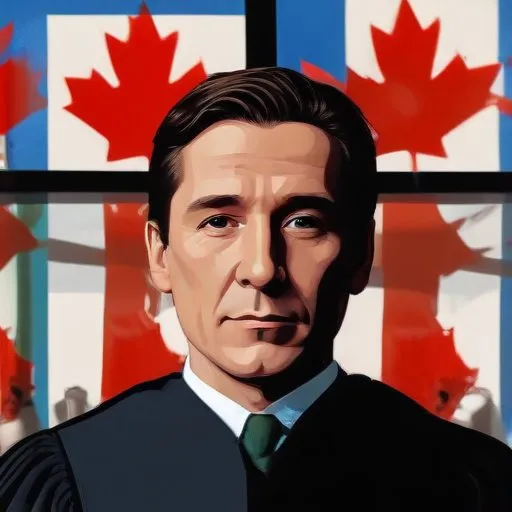
A Canadian Minister of Justice who played a key role in shaping the country's Charter of Rights and Freedoms, a cornerstone of Canadian democracy.
Guy Favreau, a Canadian lawyer, politician, and judge, left an indelible mark on the country's political and judicial landscape. Best known for his influential stints as Minister of Justice and Attorney General of Canada, Favreau's dedication to public service and commitment to upholding the rule of law continue to inspire generations of Canadians.
Born on May 20, 1917, in Montreal, Quebec, Favreau was the son of Léopold Favreau and Béatrice Gagnon. He pursued higher education at the Université de Montréal, earning a Bachelor of Arts and an LL.B. degree. After being called to the Bar of Quebec in 1940, Favreau embarked on a successful law career in Montreal, practicing until 1952.
In 1952, Favreau joined the Restrictive Trade Practices Commission in Ottawa, where he honed his skills in public service. This experience laid the foundation for his future accomplishments. In 1955, he became Assistant Deputy Minister of Justice, further solidifying his reputation as a trusted and capable public servant.
Favreau's contributions extended beyond politics; he played a crucial role in establishing the Faculty of Civil Law at the University of Ottawa, where he taught and shared his expertise with future generations of lawyers.
In 1963, Favreau entered the world of politics, winning the riding of Papineau as a Liberal candidate. He was reelected in 1965, and his dedication to public service earned him numerous cabinet positions, including:
Favreau's tenure as Minister of Justice and Attorney General of Canada was marked by significant reforms, including his efforts to combat organized crime and improve the country's judicial system.
Favreau's career was not without controversy. Allegations surrounding his involvement in the prison escape of Lucien Rivard led to his resignation as Attorney General in 1964. Despite this setback, Favreau continued to serve his country, and in 1967, he was appointed a judge of the Quebec Superior Court.
Tragically, Favreau's life was cut short on July 11, 1967. His legacy, however, endures. The Complexe Guy-Favreau, the federal government's main building in Montreal, was built in 1983 and named in his honor, a testament to his lasting impact on Canadian politics and law.
Guy Favreau's commitment to public service, his contributions to the development of Canada's judicial system, and his tireless efforts to promote justice and equality have left an indelible mark on Canadian history. His legacy continues to inspire future generations of politicians, lawyers, and public servants, ensuring that his impact will be felt for years to come.
Born in 1897
A Canadian leader who served as Prime Minister and won the Nobel Peace Prize for resolving the Suez Canal Crisis, known for his diplomatic efforts and peacekeeping initiatives.
Born in 1919
The charismatic leader who championed Canadian unity and implemented progressive policies, known for his iconic style and influential legacy in shaping modern Canada.
92 Years Old
The 20th Prime Minister of Canada, serving from 1993 to 2003, known for his leadership during the Quebec sovereignty movement and his role in shaping Canada's national unity. He implemented policies like the Clarity Act and the National Child Benefit.
45 Years Old
American professional ice hockey player who won two Stanley Cup championships and was a four-time NHL All-Star. Known for his rugged defensive play and physical presence on the ice.
71 Years Old
A Canadian politician and sociologist who served as Minister of the Environment, known for his advocacy on climate change and implementation of the Kyoto Protocol. He led the Liberal Party of Canada and was a key figure in shaping the country's environmental policies.
79 Years Old
A Canadian journalist and politician who served as the leader of the Liberal Party of Canada and was a prominent public intellectual, known for his writings on politics, history, and human rights.
54 Years Old
The 23rd Prime Minister of Canada, known for his progressive policies and charismatic leadership, has been a prominent figure in Canadian politics since 2015. He has been a strong advocate for climate action, diversity, and inclusion.
