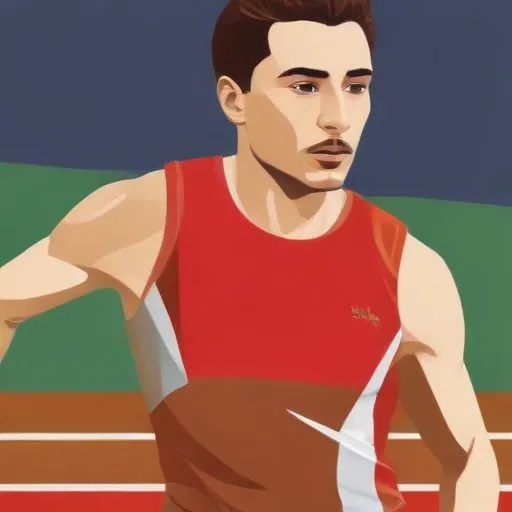
Gyula Kellner: The Hungarian Athlete Who Made History at the 1896 Summer Olympics
A Pioneer in the World of Athletics
Gyula Kellner is renowned for being one of the pioneering athletes to compete in the first modern Olympic marathon at the 1896 Summer Olympics in Athens. This remarkable feat, which earned him a bronze medal, catapulted him into the annals of history, making him a celebrated figure in the world of athletics.
Early Life and Career
Born on April 11, 1871, in Budapest, Kingdom of Hungary, Kellner demonstrated a natural aptitude for sports from a young age. He began his athletic career as a member of the Hungarian Athletic Club, where he honed his skills in various track and field events.
The 1896 Summer Olympics: A Defining Moment
The 1896 Summer Olympics, held in Athens, Greece, marked a significant milestone in Kellner's career. He was one of the 17 brave athletes to participate in the inaugural modern Olympic marathon, a grueling 40-kilometer race that would test the limits of human endurance. With a remarkable time of 3:06:35, Kellner finished in fourth place, only to be later awarded the bronze medal when Spiridon Belokas, the original third-place finisher, was disqualified for taking a carriage ride during the race.
Legacy and Impact on Modern Athletics
Kellner's remarkable achievement at the 1896 Summer Olympics paved the way for future generations of athletes. His participation in the inaugural modern Olympic marathon helped establish the event as a cornerstone of the Olympic Games, inspiring countless athletes to follow in his footsteps. Today, Kellner is remembered as a trailblazer in the world of athletics, his name etched in the history books alongside other legendary athletes of the era.
Personal Life and Later Years
After retiring from athletics, Kellner lived a relatively quiet life, leaving behind a legacy that would continue to inspire future generations. He passed away on July 28, 1940, in Szolnok, Kingdom of Hungary, leaving behind a rich heritage that would forever be remembered in the annals of Olympic history.
Trivia and Fun Facts
- Kellner was the first Hungarian athlete to participate in the modern Olympic Games.
- He was a member of the Hungarian Athletic Club, one of the oldest and most esteemed athletic clubs in Hungary.
- Kellner's bronze medal at the 1896 Summer Olympics was the first Olympic medal won by a Hungarian athlete.
Conclusion
Gyula Kellner's remarkable achievement at the 1896 Summer Olympics cemented his place in the history books as a pioneering athlete who helped shape the world of athletics. His legacy continues to inspire and motivate athletes around the world, serving as a testament to the power of dedication, perseverance, and human spirit.
FAQ
What are the notable achievements of Gyula Kellner in Hungarian athletics?
Gyula Kellner was a renowned Hungarian runner who won several national championships and set multiple records in the 800m and 1500m events. His most notable achievement was winning the gold medal at the 1906 Intercalated Games in Athens.
What was Gyula Kellners early life and education like?
Gyula Kellner was born on April 11, 1871, in Budapest, Hungary. He developed an interest in athletics during his school days and went on to study law at the University of Budapest.
What was Gyula Kellners contribution to Hungarian sports?
Gyula Kellner played a crucial role in popularizing athletics in Hungary. He was one of the founding members of the Hungarian Athletic Club and served as its president from 1903 to 1907.
Did Gyula Kellner participate in the Olympic Games?
Yes, Gyula Kellner participated in the 1896 Summer Olympics in Athens, where he finished sixth in the 800m event.
What is Gyula Kellners legacy in Hungarian sports?
Gyula Kellner is remembered as one of the pioneers of Hungarian athletics. He inspired a generation of athletes and contributed significantly to the development of sports in Hungary.