


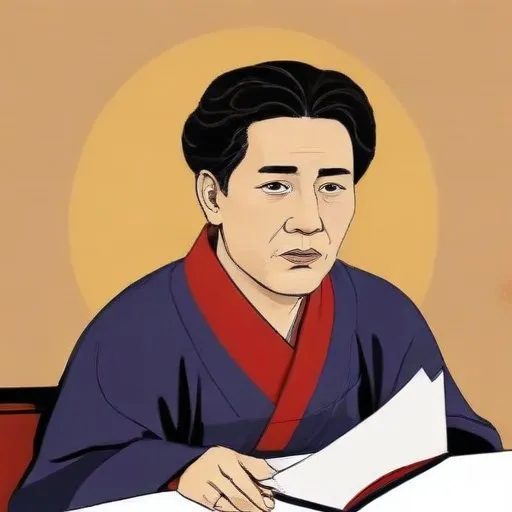
A leading figure in Korea's early 20th-century literary scene, known for his poetry that blended traditional Korean styles with modernist elements, exploring themes of love, nature, and social change.
Han Yongun, known by his pen name Manhae, was a renowned Korean Buddhist reformer and poet of the 20th century. He is celebrated for his groundbreaking works that seamlessly merged nationalism, love, and spirituality, inspiring a generation of Koreans to fight for independence and social change.
Born on August 29, 1879, in Hongseong, South Chungcheong Province, Joseon, Han Yongun was destined for greatness. In his early years, he studied the Chinese classics in a traditional seodang school, which laid the foundation for his future literary pursuits.
Prior to his ordination as a Buddhist monk, Han Yongun was actively involved in resisting Japanese influence in Korea, which eventually led to the occupation from 1905 to 1945. His fervent nationalism and desire for reform led him to live in seclusion at Oseam in the Baekdam Temple from 1896, where he delved deep into Buddhist scriptures and modern philosophical texts.
In 1905, Han Yongun received the robes of the Jogye Order of monks and later traveled to Japan in 1908 to study Buddhism and Eastern philosophy for six months. This journey not only broadened his understanding of the Far Eastern traditions but also instilled in him a sense of purpose and conviction.
Upon his return, he became one of the key signatories to the Korean Declaration of Independence in 1919, cementing his position as a leading figure in the fight for Korean sovereignty.
Han Yongun's poetry is a testament to his remarkable vision and creativity. His works often blended nationalism and sexual love, creating a unique and powerful narrative that resonated with the Korean people. One of his most iconic collections, Nimui Chimmuk (Lover's Silence), published in 1926, delves into the themes of equality, freedom, and passive resistance, inspiring a generation of Koreans to fight for their rights.
Another seminal work, The Restoration of Korean Buddhism (Joseonbulgyoyusimlon), published in 1913, critiqued the anachronistic isolationist policy of Joseon Buddhism and its disconnection from contemporary reality. This pioneering work emphasized the principles of equality, self-discovery, and progress, sending shockwaves through the intellectual community.
Han Yongun's contributions to Korean literature, Buddhism, and the struggle for independence have left an indelible mark on Korean society. His unwavering commitment to reform and his remarkable literary talents have made him an icon of Korean culture.
Through his life and works, Han Yongun has demonstrated that the pursuit of spirituality, creativity, and social change can be intertwined, inspiring generations to come.
These quotes, among many others, continue to inspire Koreans around the world, serving as a reminder of Han Yongun's enduring legacy.
Born in 1878
Korean independence activist and politician who advocated for democracy and education, playing a key role in shaping modern Korea's identity.
