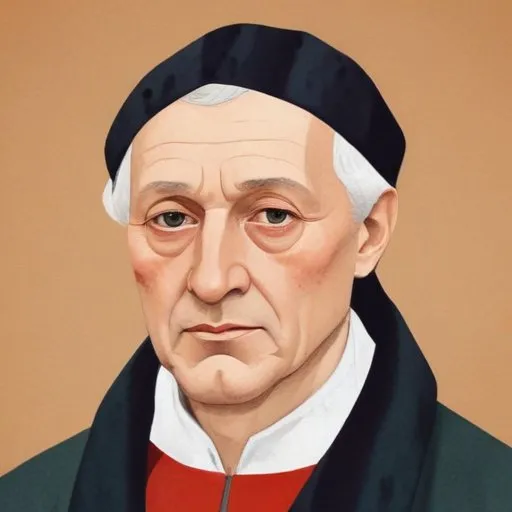
Hans Buchner: The Maestro of Renaissance Organ Music
A Legacy of Sound
As a renowned German organist and composer, Hans Buchner left an indelible mark on the world of Renaissance music. He is best known for his monumental work,
Fundamentbuch, a comprehensive collection of organ music that also serves as aguide to the techniques of playing and improvising on plainchant.
Early Life and Influences
Born on October 26, 1483, in Ravensburg, Germany, Buchner's early life was shaped by his studies under the tutelage of
Paul Hofhaimer, a prominent organist of the time. This formative period laid the foundation for his future success as a master organist and composer.
Career Highlights
Buchner's professional career took off in 1506 when he became the cathedral organist in Konstanz, a position he held for many years. During this time, he developed a close relationship with the emperor Maximilian I and worked alongside other notable composers, including Heinrich Isaac. One of his most notable works from this period is the Easter sequence,
Victimae paschali laudes, which showcases his mastery of the organ.
A Life of Service and Music
As the Reformation swept across Europe, Buchner followed the bishop to Meersburg, where he continued to serve as the organist. Despite the turmoil of the times, Buchner remained dedicated to his craft, often traveling to inspect new organs and share his expertise with others. His passion for music and his commitment to his work earned him recognition and respect from his contemporaries.
Teachers and Students
Buchner's influence extended beyond his own compositions to the next generation of musicians. Among his pupils was the Swiss organist and composer, Fridolin Sicher, who went on to make significant contributions to the world of Renaissance music.
Legacy and Impact
Today, Hans Buchner's
Fundamentbuch remains a testament to his innovative spirit and his mastery of the organ. This comprehensive collection of music and instructional materials has inspired countless musicians and scholars, cementing Buchner's place as one of the most important figures in Renaissance music.
Timeline of Key Life Events
- 1483: Born in Ravensburg, Germany
- 1506: Became cathedral organist in Konstanz
- 1529: Applied for a position at Speyer
- 1538: Died in Konstanz, Germany
Quotes and Memorable Sayings
While Buchner's words may not have been recorded for posterity, his music continues to speak to us across the centuries, a testament to the power of art to transcend time and space.
Influence on Modern Society
Buchner's contributions to Renaissance music have had a lasting impact on the development of Western classical music. His legacy can be heard in the works of later composers, including J.S. Bach, and continues to inspire new generations of musicians and composers.
FAQ
What is Hans Buchners contribution to Renaissance music?
Hans Buchner was a renowned German Renaissance composer who made significant contributions to the development of sacred music in the 16th century. His compositions, including masses and motets, showcased his mastery of contrapuntal techniques and innovative use of harmony.
What is the significance of Hans Buchners choral music?
Hans Buchners choral music is notable for its complexity and expressiveness, reflecting the composers deep understanding of Renaissance polyphony. His works for multiple voices are highly regarded for their intricate harmonies and ornamentation.
Where did Hans Buchner study music?
Hans Buchner studied music at the University of Freiburg, where he was exposed to the works of prominent Renaissance composers. This education laid the foundation for his subsequent career as a composer and organist.
What is the relationship between Hans Buchner and the Fugger family?
Hans Buchner had close ties with the influential Fugger family, who were prominent patrons of the arts. The Fuggers commissioned works from Buchner and supported his musical endeavors, facilitating his rise to prominence in Renaissance musical circles.
What is Hans Buchners legacy in German music?
Hans Buchners legacy in German music is profound, as he helped to establish the country as a hub for Renaissance musical innovation. His compositions continue to be celebrated and studied by music scholars and enthusiasts alike, offering a window into the rich cultural heritage of 16th-century Germany.