


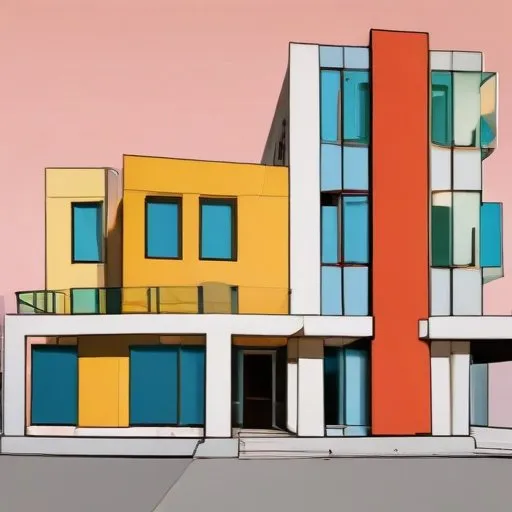
A renowned architect and academic, famous for designing the iconic Haas House, a postmodern masterpiece that redefined urban architecture.
Hans Hollein, the Austrian architect and designer, left an indelible mark on the world of architecture with his bold, innovative, and provocative designs. He is perhaps best known for his significant contributions to postmodern architecture, a movement that rejected the modernist principles of functionality and simplicity.
Hollein was born on March 30, 1934, in Vienna, Austria. He graduated from the Academy of Fine Arts Vienna in 1956, where he studied under the tutelage of Clemens Holzmeister. His academic journey took him to the Illinois Institute of Technology and the University of California, Berkeley, where he earned his Master of Architecture degree in 1960.
In 1963, Hollein, along with Walter Pichler, organized an exhibition titled "Architecture" at Galerie nächst St. Stephan in Vienna, showcasing their utopian architectural ideas. This exhibition marked the beginning of his journey as a pioneer of postmodern architecture.
Hollein was a guest professor at Washington University in St. Louis and the Yale School of Architecture. He also taught at the Kunstakademie Düsseldorf and the University of Applied Arts Vienna. His collaborations with the Memphis Group and Alessi Company showcased his design prowess, and he even designed a stage for a production of Arthur Schnitzler's drama "Komödie der Verführung" at Vienna's Burgtheater.
Hollein's contributions to architecture were recognized with the prestigious Pritzker Architecture Prize in 1985, solidifying his position as a leading figure in the field.
Hans Hollein's legacy extends far beyond his remarkable buildings. He challenged the status quo, encouraging architects to rethink their approach to design and create spaces that are both functional and aesthetically pleasing. His influence can be seen in the work of many contemporary architects, cementing his place as one of the most important architectural minds of the 20th century.
"Architecture is not just about building, it's about creating a atmosphere, a feeling, a mood."
Hans Hollein's work was a reaction against the modernist principles that dominated the architectural landscape of the time. His postmodern approach paved the way for a new generation of architects, encouraging them to experiment with form, function, and aesthetics. Today, Hollein's buildings stand as testaments to his innovative spirit and his significant contribution to the world of architecture.
Born in 1867
Visionary architect behind iconic, harmonious structures that blend seamlessly into their surroundings, redefining modern American architecture.
Born in 1887
A pioneer of modern architecture, famous for designing innovative, functional, and visually striking buildings that transformed urban landscapes. His works continue to inspire architects and designers worldwide.
Born in 1886
A pioneering architect who revolutionized modern skyscraper design with sleek, minimalist, and functional buildings that redefined urban landscapes. His iconic creations continue to inspire architects and influence city skylines.
Born in 1883
A pioneer of modernist architecture, he designed iconic buildings that blended functionality with aesthetics, including the John F. Kennedy Federal Building. His work continues to inspire architects and designers today.
Born in 1910
A Finnish-American architect and furniture designer who created iconic, futuristic structures and designs that blended art and functionality, including the iconic Gateway Arch.
Born in 1892
A pioneering architect who designed iconic buildings that blended seamlessly into their surroundings, revolutionizing modernist architecture with his sleek, functional, and elegant style.
Born in 1917
A renowned architect who designed iconic buildings that blend modernity with cultural sensitivity, leaving an indelible mark on the urban landscape.
