


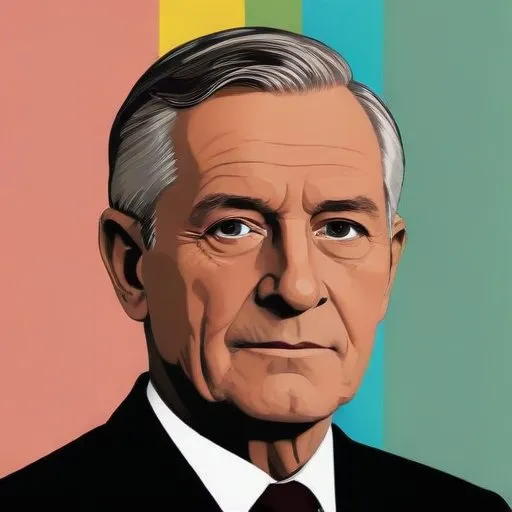
Australian public servant who played a crucial role in shaping the country's post-war reconstruction and economic development, serving as the Secretary of the Department of Post-War Reconstruction from 1945 to 1950.
Harold Patrick Breen, a senior Australian public servant, is renowned for his instrumental role in shaping the country's defence production landscape. As the inaugural head of the Department of Defence Production from 1951 to 1957, Breen's leadership played a crucial part in strengthening Australia's defence capabilities during a pivotal period in the nation's history.
Born on 30 April 1893 in Richmond, Melbourne, Breen's journey in the Commonwealth Public Service commenced in 1910. He joined the Department of Defence in the Ordnance Department, where he rose through the ranks, demonstrating exceptional dedication and expertise. His impressive career trajectory led to his appointment as Secretary of the Department of Supply and Development in July 1949, and later, head of the Department of Supply in 1950.
In 1951, the Department of Defence Production was established, and Breen was appointed as its first head. During his tenure, he oversaw the department's growth and development, ensuring that Australia's defence production capabilities were adequately equipped to meet the nation's security needs. Breen's leadership during this period was marked by his vision, strategic thinking, and operational expertise.
Breen's outstanding contribution to Australia's defence production was acknowledged in June 1953, when he was appointed a Commander of the Order of the British Empire.
After dedicating over four decades to public service, Breen retired in 1957, leaving behind a lasting legacy in the realm of defence production. He passed away on 6 July 1966 in Malvern and was laid to rest in St Kilda Cemetery, Victoria.
Harold Breen's remarkable career and achievements have left an indelible mark on Australia's defence production landscape. His leadership, vision, and expertise have inspired generations of public servants and defence professionals. Today, his legacy continues to be felt, serving as a testament to the power of dedicated public service and commitment to national security.
Born in 1905
A renowned Australian historian, poet, and politician who served as the 17th Governor-General of Australia, known for his literary works and contributions to the country's cultural heritage.
Born in 1894
The 12th Prime Minister of Australia, a lawyer-turned-politician who played a crucial role in shaping the country's post-war economy and foreign policy, and is often credited with establishing the modern Australian identity.
Born in 1881
Early Hollywood pioneer who directed over 500 films and was a key figure in the development of the film industry. Known for his prolific output and innovative filmmaking techniques.
