


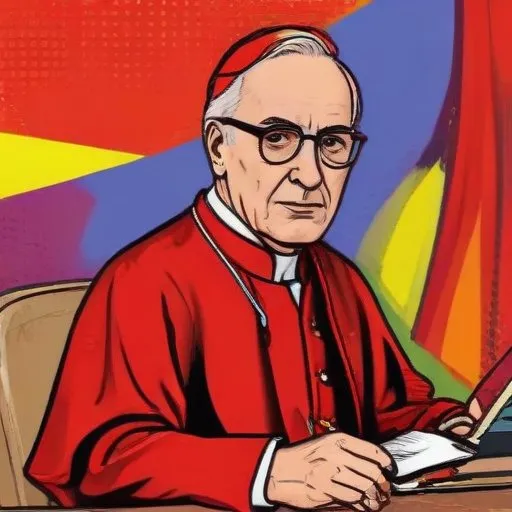
A prominent Indigenous leader and advocate for Indigenous rights, known for his tireless efforts to improve the lives of Indigenous peoples in Canada.
Harold Cardinal, a renowned Cree writer, politician, teacher, negotiator, and lawyer, is predominantly known for his tireless efforts in advocating for the rights of First Nation peoples in Canada. Throughout his career, he passionately championed the cause of Indigenous Canadians, striving to ensure their equal place within the Canadian mosaic.
Born on January 27, 1945, in High Prairie, Alberta, to Frank and Agnes Cunningham Cardinal, Harold grew up on the Sucker Creek Reserve. He attended high school in Edmonton and later pursued sociology at St. Patrick's College in Ottawa, which is now part of Carleton University.
Cardinal's activism began early in life, with his election as president of the Canadian Indian Youth Council in 1966. His leadership qualities became evident in 1968, when, at the age of 23, he was elected leader of the Indian Association of Alberta, a position he held for an unprecedented nine terms. During this period, he played a pivotal role in the formation of the National Indian Brotherhood, which later became the Assembly of First Nations.
Subsequently, Cardinal served as the Chief of the Sucker Creek Indian Band, his home community, and later as the Vice Chief of the Assembly of First Nations. Notably, he played a key role in the patriation of the Canadian Constitution in the early 1980s. In 1984, he was instrumental in the creation of the Prairie Treaty Nations Alliance, representing all First Nations of Alberta, Saskatchewan, and Manitoba.
Cardinal's philosophical stance was rooted in his commitment to the rights and dignity of Indigenous peoples. He believed in the importance of preserving and promoting Indigenous culture, language, and traditions. Throughout his career, he emphasized the need for reconciliation and cooperation between Indigenous and non-Indigenous Canadians.
Harold Cardinal's contributions have had a lasting impact on modern Canadian society. His advocacy for Indigenous rights has paved the way for future generations of Indigenous leaders and activists. Moreover, his work has helped to raise awareness about the historical and ongoing struggles of Indigenous peoples in Canada.
Cardinal authored several influential books, including "The Rebirth of Canada's Indians" and "The Unjust Society". These works provide invaluable insights into the experiences and perspectives of Indigenous Canadians, offering a powerful critique of the country's treatment of its Indigenous population.
Harold Cardinal's legacy continues to inspire and empower Indigenous Canadians. His tireless advocacy, coupled with his commitment to education and community development, has left an indelible mark on Canadian history. His passing on June 3, 2005, at the age of 60, was a profound loss, but his work and ideas continue to shape the country's discourse on Indigenous issues.
"The time has come for the Government of Canada to recognize that Indians are not wards of the state, but partners in Confederation."
"We are not Red Tile in the Canadian Mosaic, we are the very foundation upon which the Mosaic is built."
These quotes, among many others, aptly capture Cardinal's vision for a more equitable and inclusive Canada, where Indigenous peoples are recognized as valued partners and contributors.
Born in 1919
The charismatic leader who championed Canadian unity and implemented progressive policies, known for his iconic style and influential legacy in shaping modern Canada.
92 Years Old
The 20th Prime Minister of Canada, serving from 1993 to 2003, known for his leadership during the Quebec sovereignty movement and his role in shaping Canada's national unity. He implemented policies like the Clarity Act and the National Child Benefit.
Born in 1922
A charismatic leader who championed Quebec's independence and shaped the province's distinct identity through his passionate politics and journalism. He's revered for his role in Quebec's Quiet Revolution.
Born in 1904
A Scottish-Canadian minister and politician who served as the 7th Premier of Saskatchewan, known for championing universal healthcare and social welfare programs. He's often referred to as the "father of Medicare."
98 Years Old
A journalist and politician who served as the 25th Governor General of Canada, known for his charismatic personality and dedication to promoting Canadian unity and diversity. He was a beloved figure in Canadian politics and media.
87 Years Old
The first non-British-born person to hold the position, she served as the representative of the Canadian monarch, promoting Canadian identity and unity, while also advocating for diversity and inclusivity.
68 Years Old
The first black person to hold the position, serving as the representative of the Canadian monarch, and a champion for arts and culture. She played a crucial role in promoting diversity and inclusivity in Canada.
70 Years Old
A Canadian politician and sociologist who served as Minister of the Environment, known for his advocacy on climate change and implementation of the Kyoto Protocol. He led the Liberal Party of Canada and was a key figure in shaping the country's environmental policies.
