


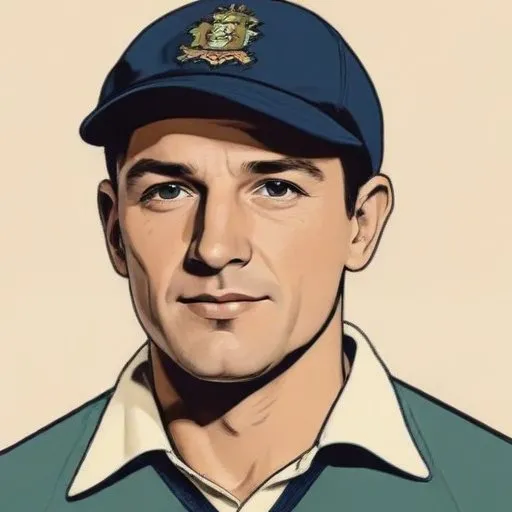
Notorious fast bowler who terrorized batsmen with his intimidating pace and aggressive style, particularly in the infamous Bodyline series against Australia in 1932-33.
Harold Larwood, a name synonymous with speed and accuracy on the cricket pitch, was considered by many to be the finest and fastest fast bowler of his generation and one of the fastest bowlers of all time. His unyielding pace and pinpoint precision earned him a reputation as a formidable opponent, striking fear into the hearts of opposing batsmen.
From humble beginnings as a coal miner's son, Larwood began working in the mines at the tender age of 14. However, it was his exceptional skills on the cricket field that would eventually bring him to the forefront of the sport. Recommended to Nottinghamshire on the basis of his impressive performances in club cricket, Larwood rapidly acquired a place among the country's leading bowlers.
The advent of Australian batsman Don Bradman marked the end of English cricket supremacy, with Larwood and other bowlers being completely dominated by Bradman during Australia's victorious tour of 1930. This led to the development of the fast leg theory, also known as bodyline bowling, under the guidance of England's combative captain Douglas Jardine.
With Larwood as its spearhead, the bodyline bowling attack was used with considerable success in the 1932-33 Test series in Australia. However, the tactic was deemed unsportsmanlike by the Australians, leading to a furore that brought about a premature and acrimonious end to Larwood's international career.
Larwood refused to apologize for his bowling, citing that he was merely carrying out his captain's instructions. Although he never played for England again after the 1932-33 tour, he continued his county career with considerable success for several more seasons.
Larwood's legacy extends beyond his achievements on the pitch. His pioneering role in the development of bodyline bowling has had a lasting impact on the sport, influencing generations of cricketers to come.
"I was only doing what my captain told me to do."
Larwood's story serves as a testament to the complexities of sport, highlighting the fine line between competitive spirit and unsportsmanlike behavior. His legacy continues to be debated and admired by cricket enthusiasts around the world.
Harold Larwood's remarkable career serves as a reminder of the importance of sportsmanship, skill, and dedication. His refusal to apologize for his actions may have sparked controversy, but it also showcased his unwavering commitment to his craft and his team.
Born in 1908
A cricket legend and iconic figure in Australian sports, renowned for his incredible batting skills and unbeaten record, earning him the nickname "The Don".
Born in 1903
A dominant right-handed batsman and successful coach who held multiple records for his impressive cricketing career, including the highest individual Test score for England.
Born in 1905
A talented English cricketer who took 1,956 wickets in first-class cricket, and a soldier who fought in World War II, ultimately giving his life in battle.
Born in 1905
A talented English cricketer who played for Kent County Cricket Club and was known for his impressive bowling skills, taking over 1,000 wickets in his career.
Born in 1891
A pioneering leg-spinner who took 216 wickets in 37 Tests, known for his unorthodox style and ability to spin the ball both ways. He is considered one of the greatest bowlers in cricket history.
76 Years Old
Conservative commentator and bestselling author known for his provocative opinions and fiery debates on politics and current events.
64 Years Old
A fearsome fast bowler and charismatic character, known for his aggressive style and iconic mustache, entertaining fans on and off the field.
