


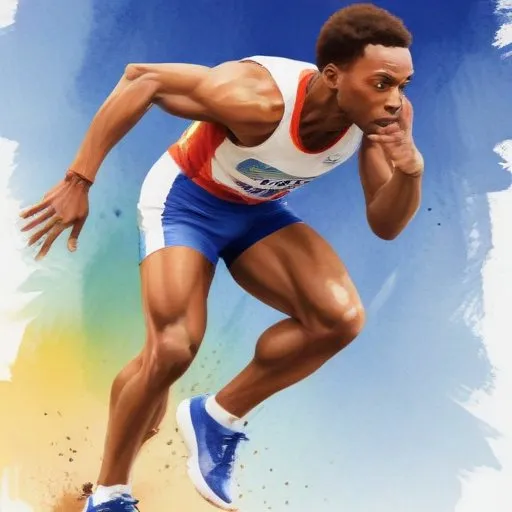
A pioneering athlete who broke racial barriers in British athletics, winning numerous titles and setting records in the 1920s.
Harry Edward, a trailblazing athlete, made history as Britain's first black Olympian and the first black person to win Olympic medals in 1920. This remarkable feat marked the beginning of a remarkable journey that would take him across continents, shaping his identity and impacting the world of sports and beyond.
In the 1920 Summer Olympics in Antwerp, Edward won bronze medals in both the 100m and 200m events, cementing his place in the annals of athletics history. His impressive performance earned him the AAA championships titles in the 100yd and 220yd in 1920 and 1922, as well as the 440yd title in 1922.
Born to a German mother and a Dominican father in Berlin, Edward's life was marked by resilience and adaptation. During World War I, he was imprisoned for nearly four years in a civilian detention camp from 1915 to 1918. After his release, he migrated to the United Kingdom, settling in London, where he would base his athletic career until 1922.
In 1923, Edward emigrated to the United States, invited to compete at Yankee Stadium in New York City. He eventually settled in Harlem, becoming an integral part of the vibrant cultural and political scene of the Harlem Renaissance. Edward worked for the City of New York and volunteered for the United Nations, dedicating his life to public service.
Late in life, Edward penned a memoir, When I Passed the Statue of Liberty I Became Black, a poignant reflection on his experiences straddling two cultures. The memoir, rediscovered and edited by British writer and filmmaker Neil Duncanson, offers a candid exploration of Edward's journey, shedding light on the complexities of identity, belonging, and the African diaspora experience.
Harry Edward's remarkable life and achievements have left an indelible mark on the world of athletics, politics, and culture. As a pioneer, he paved the way for future generations of athletes and individuals from diverse backgrounds, inspiring them to strive for excellence and challenge the status quo.
Harry Edward's extraordinary life serves as a testament to the power of perseverance, resilience, and determination. His legacy continues to inspire, reminding us that the boundaries of human achievement are limited only by our imagination and courage.
Born in 1899
A British Olympic gold medalist and Cambridge University student who broke athletic records and fought against class-based barriers, later becoming a journalist and lawyer.
Born in 1902
A Scottish athlete who won Olympic gold in the 400 meters at the 1924 Paris Games, and later dedicated his life to missionary work in China.
Born in 1912
A British athlete who won gold and bronze medals in the 1936 Summer Olympics, and later served as a soldier in World War II.
