


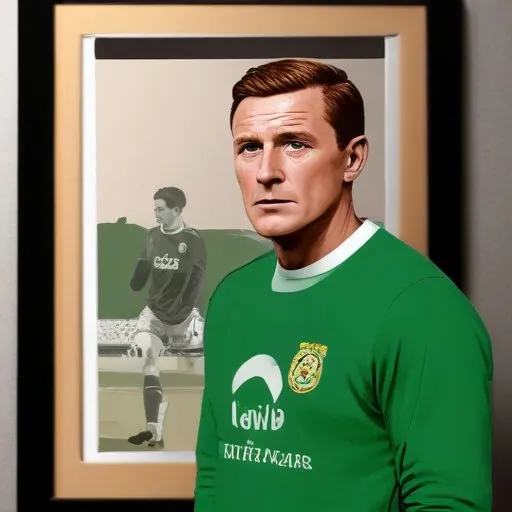
Goalkeeper and manager who played for Manchester United and Northern Ireland, known for his heroic actions during the 1958 Munich air disaster, saving several lives.
Harry Gregg, the Northern Irish professional footballer and manager, is etched in the annals of history as the "Hero of Munich" for his courageous actions in the aftermath of the devastating Munich air disaster in 1958. As a goalkeeper for Manchester United, Gregg's bravery and selflessness saved numerous lives, including those of his teammates and a pregnant woman, earning him a special place in the hearts of football fans worldwide.
Born on October 27, 1932, in Tobermore, County Londonderry, Northern Ireland, Gregg began his football career as an apprentice joiner while playing for Windsor Park Swifts, the reserve team of Linfield. He soon moved to Coleraine, his local club, before earning a move to Doncaster Rovers at the age of 18.
In December 1957, Gregg transferred to Manchester United for a then-world-record fee of £23,500, becoming an integral part of Sir Matt Busby's team. During his time at United, Gregg made 247 appearances, solidifying his position as one of the best goalkeepers in the league.
On February 6, 1958, tragedy struck when the plane carrying the Manchester United team crashed on takeoff from Munich Airport, killing 23 people. Gregg's actions in the aftermath of the disaster were nothing short of heroic. He pulled his teammates, including Bobby Charlton, Jackie Blanchflower, and Dennis Viollet, from the burning plane, as well as Vera Luki, the pregnant wife of a Yugoslav diplomat, and her two-year-old daughter, Vesna.
Gregg played in United's first match after the disaster, a FA Cup fifth-round tie with Sheffield Wednesday, which they won 3-0. He went on to make 25 appearances for the Northern Ireland national team between 1954 and 1963, including at the 1958 FIFA World Cup.
After retiring from professional football, Gregg went on to manage several clubs, including Carlisle United, Crewe Alexandra, Shrewbury Town, and Swansea City.
Gregg's bravery and contributions to football earned him numerous accolades, including the Freedom of the Borough of Coleraine in 1998. His legacy continues to inspire generations of football players and fans alike, serving as a testament to the power of courage and selflessness.
George Best, a former teammate of Gregg's, once said, "Bravery is one thing, but what Harry did was about more than bravery. It was about goodness."
Gregg received the UEFA Presidential Award in 2015, recognizing his outstanding contribution to football.
Gregg passed away on February 16, 2020, leaving behind a legacy that will continue to inspire and motivate generations to come.
Harry Gregg's remarkable story serves as a beacon of hope and courage, reminding us all of the importance of selflessness and bravery in the face of adversity.
80 Years Old
A mercurial winger and attacking midfielder who dazzled fans with his pace, skill, and goalscoring ability, earning him the nickname "the fifth Beatle" for his rockstar-like status.
85 Years Old
A legendary English footballer and captain who led his team to win the 1966 World Cup, known for his exceptional defensive skills and leadership on the pitch.
Born in 1922
A legendary English footballer and winger, known for his pace, skill, and scoring ability, earning him the nickname "The Preston Plumber."
Born in 1925
A prolific goal-scorer and charismatic leader, known for his powerful playing style and successful managerial career, earning him legendary status in English football.
90 Years Old
A talented and dominant midfielder who played for Manchester United and the English national team, known for his exceptional skill, vision, and leadership on the pitch.
