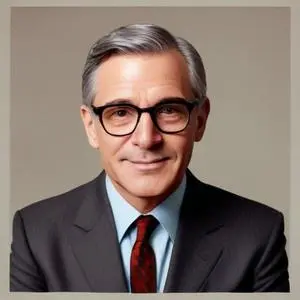
Harry Stack Sullivan: The Pioneering Psychoanalyst Who Redefined Mental Health
A Legacy of Interpersonal Relationships
Harry Stack Sullivan, a renowned American Neo-Freudian psychiatrist and psychoanalyst, is best known for his groundbreaking work in understanding the intricate web of interpersonal relationships that shape our personalities and mental health. His pioneering theory, which posits that personality can never be isolated from the complex social dynamics in which we exist, has had a profound impact on the field of psychiatry.
Early Life and Influences
Born on February 21, 1892, in Norwich, New York, to Irish immigrant parents, Sullivan grew up in a socially isolated environment, which would later inspire his interest in psychiatry. He attended the Smyrna Union School and then spent two years at Cornell University before earning his medical degree from the Chicago College of Medicine and Surgery in 1917. Sullivan's early life was marked by social exclusion, which would later inform his work on the significance of interpersonal relationships in shaping our mental health.
Theory of Interpersonal Relationships
Sullivan's most significant contribution to the field of psychiatry lies in his theory of interpersonal relationships, which posits that cultural forces are largely responsible for mental illnesses. He believed that our personalities are shaped by the complex network of relationships we are enmeshed in, and that mental health issues arise from disturbances in these relationships. This approach, known as social psychiatry, marked a significant departure from traditional Freudian psychoanalysis, which focused on the individual's intrapsychic experiences.
The Self System and Loneliness
Sullivan's work also introduced the concept of the Self system, a configuration of personality traits developed in childhood and reinforced by positive affirmation and security operations. He believed that loneliness was the most painful human experience, resulting from a lack of satisfying relationships. This idea challenged the traditional view of loneliness as a personal failing, instead highlighting its roots in social and cultural factors.
Extending Freudian Psychoanalysis
Sullivan was one of the first psychoanalysts to extend Freudian psychoanalysis to the treatment of patients with severe mental disorders, particularly schizophrenia. His work with these patients demonstrated the efficacy of his interpersonal approach, which emphasized the importance of understanding the patient's social context in treating mental illness.
Collaborations and Influences
Sullivan collaborated with prominent psychoanalysts such as Clara Thompson, Karen Horney,
Erich Fromm, Otto Allen Will Jr., Erik H. Erikson, and Frieda Fromm-Reichmann, laying the groundwork for a more holistic understanding of human psychology. His work has had a lasting impact on the development of psychoanalytic theory and practice.
quote>
"One must pay attention to the interactional, not the intrapsychic." - Harry Stack Sullivan
Legacy and Impact
Sullivan's contributions to psychiatry have had a profound impact on modern society. His emphasis on interpersonal relationships has influenced the development of social psychiatry, family therapy, and community mental health. His work has also informed public health policy, highlighting the importance of addressing social determinants of mental health.
Major Works
- Conceptions of Modern Psychiatry (1940)
- The Interpersonal Theory of Psychiatry (1953)
- The Psychiatric Interview (1954)
Personal Milestones and Key Life Events
- 1917: Earned medical degree from Chicago College of Medicine and Surgery
- 1925: Began working at St. Elizabeth's Hospital in Washington, D.C.
- 1930s: Developed his interpersonal theory of psychiatry
- 1940s: Collaborated with other prominent psychoanalysts
Awards and Honors
- Honorary doctorate from Yale University (1947)
- Fellow of the American Psychiatric Association
Conclusion
Harry Stack Sullivan's pioneering work in interpersonal relationships has had a lasting impact on the field of psychiatry. His emphasis on social dynamics, loneliness, and the Self system has informed our understanding of mental health and continues to influence psychoanalytic theory and practice. As a pioneer in the field, Sullivan's legacy serves as a testament to the power of human relationships in shaping our lives.
FAQ
What is Harry Stack Sullivans most significant contribution to psychiatry?
Harry Stack Sullivan is best known for developing the theory of interpersonal psychiatry, which emphasizes the role of interpersonal relationships in shaping mental health. His work influenced the development of psychotherapy and interpersonal psychology.
How did Harry Stack Sullivans work differ from Freudian psychoanalysis?
Harry Stack Sullivans interpersonal psychiatry diverged from Freudian psychoanalysis in its focus on interpersonal relationships rather than the individual unconscious. His approach emphasized the importance of social and environmental factors in shaping mental health.
What is the significance of Harry Stack Sullivans concept of participatory action research?
Harry Stack Sullivans concept of participatory action research emphasized the importance of collaboration between researchers and participants in understanding mental health. This approach allowed for more nuanced and context-specific understanding of psychiatric issues.
How did Harry Stack Sullivans work influence the development of psychotherapy?
Harry Stack Sullivans work on interpersonal psychiatry and psychotherapy led to the development of new therapeutic approaches, including family therapy and group therapy. His ideas continue to influence psychotherapeutic practice today.
What is Harry Stack Sullivans legacy in the field of psychiatry?
Harry Stack Sullivans legacy in psychiatry is as a pioneering figure who challenged traditional Freudian approaches and emphasized the importance of interpersonal relationships and social context in understanding mental health. His work continues to shape the field of psychotherapy and interpersonal psychology.