


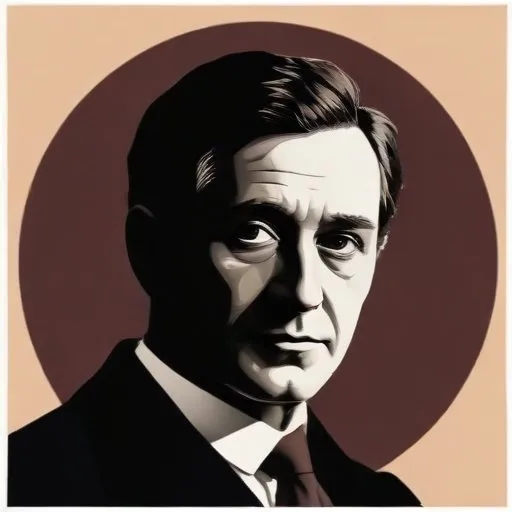
A renowned scholar who interpreted American history and politics through the lens of classical philosophy, particularly Aristotle and Lincoln, shedding light on the country's founding principles and ideals.
Harry V. Jaffa was a renowned American political philosopher, historian, columnist, and professor, best known for his seminal work on natural law, Abraham Lincoln, and the American founding. His influential writings and teachings spanned over six decades, shaping the landscape of American conservative thought and earning him a reputation as a leading authority on political philosophy.
Jaffa was born on October 7, 1918, in New York City to Arthur Solomon Jaffa and Frances Landau Jaffa. His family was of Jewish descent, and his middle name "Victor" was a reference to World War I, which ended in the same year he was born. Jaffa earned a Bachelor of Arts degree in English literature from Yale University and a Doctor of Philosophy (Ph.D.) degree in political philosophy from The New School for Social Research.
As a Ph.D. student, Jaffa became fascinated with Abraham Lincoln after discovering a copy of the Lincoln-Douglas debates in a used bookshop. This chance encounter sparked a lifelong interest in Lincoln and the American founding. Jaffa was also one of Leo Strauss's first Ph.D. students, which had a profound impact on his intellectual development.
Jaffa's work focused on natural law, natural right philosophy, and the revival of classical thought. He opposed relativism and nihilism, advocating for a return to the principles of the American founding. His writings explored the intersection of politics, philosophy, and literature, drawing on Aristotle, Thomas Aquinas, and other great thinkers.
Jaffa's magnum opus, Crisis of the House Divided: An Interpretation of the Issues in the Lincoln-Douglas Debates, published in 1959, is considered a touchstone of American political philosophy. He also wrote extensively for prominent publications, including the Claremont Review of Books, the Review of Politics, National Review, and the New York Times. In 1964, Jaffa penned the famous line "extremism in the defense of liberty is no vice" for Barry Goldwater's presidential acceptance speech.
Jaffa's work had a significant impact on the American conservative movement, shaping the thought of prominent figures such as Russell Kirk, Richard M. Weaver, and Willmoore Kendall. He engaged in intellectual debates with notable scholars, including Robert Bork on American constitutionalism. Through his writings and teachings, Jaffa inspired generations of scholars, policymakers, and thinkers.
Harry V. Jaffa's intellectual legacy continues to shape American political discourse, inspiring new generations of scholars and thinkers. His work serves as a testament to the enduring power of classical thought and the importance of understanding the American founding. As a titan of American political philosophy, Jaffa's impact will be felt for generations to come.
Born in 1899
A renowned philosopher and academic who interpreted ancient Greek philosophers, particularly Plato and Aristotle, to understand modern politics and society. His ideas have influenced contemporary political thought and American conservatism.
95 Years Old
A renowned philosopher and academic who critiqued modern education and culture, famously arguing that the closing of the American mind was caused by the failure to teach students the Great Books of Western civilization.
