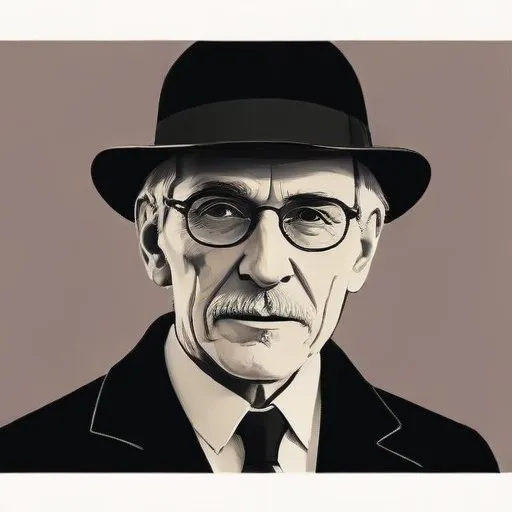
Heinrich Zille: The Chronicler of Berlin's Urban Landscape
Portraying the Unseen: Zille's Legacy in German Illustration
Heinrich Zille is renowned for his poignant and humorous illustrations that captured the essence of Berlin's working-class life during the late 19th and early 20th centuries. As a prolific caricaturist, lithographer, and photographer, Zille's work provided a unique window into the lives of the city's underprivileged, shedding light on the harsh realities of poverty, overcrowding, and social inequality.
A Childhood Marked by Hardship
Born on January 10, 1858, in Radeburg, near Dresden, Zille's early life was marked by financial struggles and familial instability. His father, Johann Traugott Zille, was a watchmaker and inventor who often found himself in debtors' prison, forcing the family to relocate to Berlin in 1867. This tumultuous upbringing had a profound impact on Zille's art, as he often drew inspiration from the struggles of the working class.
The Making of a Lithographer
Despite his father's wish for him to become a butcher, Zille's passion for drawing led him to pursue an apprenticeship as a lithographer under Fritz Hecht in 1872. This marked the beginning of a long and fruitful career, during which Zille would become synonymous with Berlin's urban landscape.
A Satirical Gaze: Zille's Work in Simplicissimus
Zille's illustrations, often humorous and poignant, caught the attention of the German weekly satirical newspaper Simplicissimus. His work with the publication cemented his reputation as a master of satire, as he expertly caricatured the city's stereotypes, from the gruff Berliner to the downtrodden working-class individual.
Documenting the Mietskasernen
Zille's most significant contribution to German illustration lies in his portrayal of the Mietskasernen, the notorious tenement barracks that housed Berlin's working poor. His scathing and humorous depiction of these overcrowded, poverty-stricken environments brought attention to the plight of the proletariat, sparking crucial conversations about social reform.
A Personal Life Marked by Love and Loss
In 1883, Zille married Hulda Frieske, with whom he had three children. Her untimely death in 1919 left Zille devastated, but he continued to create, leaving behind a legacy of work that continues to captivate audiences today.
Lasting Impact on German Culture
Heinrich Zille's illustrations have had a profound impact on German culture, influencing generations of artists, writers, and thinkers. His work continues to be celebrated for its nuanced portrayal of Berlin's urban landscape, offering a unique glimpse into the city's tumultuous past.
Quotes and Memorable Sayings
- "The Berliner is a peculiar creature, a mixture of roughness and sensitivity, of humor and seriousness."
- "Art should be a mirror held up to society, reflecting its beauty and its ugliness."
Legacy and Influence
Zille's work has inspired countless artists, including German Expressionists like Otto Dix and
George Grosz. His influence can be seen in the work of contemporary artists, photographers, and writers, who continue to find inspiration in his poignant and humorous portrayal of urban life.
Awards and Honors
- Member of the Berlin Academy of Arts (1903)
- Recipient of the Gold Medal at the World Exhibition in Brussels (1910)
Remembering Zille: A Lasting Legacy
Heinrich Zille's life and work serve as a testament to the power of art to capture the essence of a city and its people. His legacy continues to inspire, educate, and delight, offering a unique window into Berlin's rich cultural heritage.
FAQ
What was Heinrich Zilles contribution to art?
Heinrich Zille was a German illustrator and photographer who is best known for his humorous and satirical illustrations of Berlin life. He was a prominent figure in the Berlin art scene during the late 19th and early 20th centuries.
What was Heinrich Zilles style of illustration?
Heinrich Zilles illustrations were characterized by their humor, satire, and attention to detail. He often depicted everyday life in Berlin, poking fun at the citys bourgeoisie and aristocracy.
How did Heinrich Zilles work influence German art?
Heinrich Zilles work influenced the development of German art, particularly in the field of illustration and caricature. He paved the way for future generations of German artists and satirists.
What was Heinrich Zilles approach to photography?
Heinrich Zille was also an accomplished photographer, who used his camera to document everyday life in Berlin. His photographs provide a unique glimpse into the citys history and culture.
What was Heinrich Zilles legacy?
Heinrich Zilles legacy is one of humor, satire, and artistic innovation. He continues to be celebrated as a master of German illustration and photography, and his work remains popular to this day.