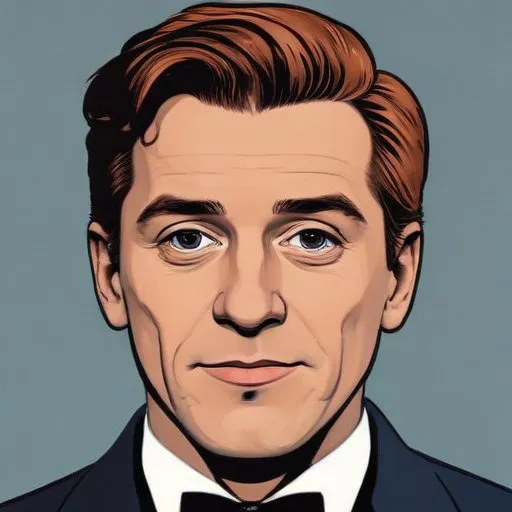
Henry Daniell: The Master of Villainous Roles
A Career Built on Shadowy Characters
Henry Daniell was a renowned English actor who made a name for himself in Hollywood with his iconic portrayals of villainous characters. With a career spanning over four decades, Daniell became synonymous with playing the "bad guy" in some of the most beloved films of the 1930s and 1940s.
Early Life and the Stage
Born on March 5, 1894, in Barnes, Surrey, Daniell was educated at St. Paul's School in London and Gresham's School in Holt, Norfolk. He began his acting career on the stage in 1913, performing in various productions across the provinces. Daniell made his London debut in 1914 at the Globe Theatre, and soon found himself playing roles in notable plays like
Monna Vanna and
The Sphinx.
War and the Wounded Years
In 1914, Daniell enlisted in the 2nd Battalion of the Norfolk Regiment during World War I. However, his military career was cut short when he was severely wounded in combat and invalided out the following year. This period of convalescence marked a turning point in Daniell's life, as he redirected his focus towards the stage.
Broadway and the Big Screen
Daniell made his Broadway debut in 1921, playing Prince Charles of Vaucluse in
Clair de Lune. He spent the next few years touring the United States, eventually returning to London's West End in 1925. It wasn't until the late 1920s that Daniell began to transition to film, making his cinematic debut in 1931.
A Career of Villainous Proportions
Daniell's breakthrough role came in 1936, when he played the part of Baron de Varville in the film
Camille, starring opposite
Greta Garbo. This marked the beginning of his long-standing reputation as a master of villainous roles. Some of his most notable performances include:
- The Great Dictator (1940) - Daniell played the role of Garbiche, a ruthless and cunning advisor to the dictator.
- Holiday (1938) - He portrayed the character of Seton Cram, a wealthy and arrogant businessman.
- The Sea Hawk (1940) - Daniell played the role of Lord Wolfingham, a treacherous and cunning nobleman.
A Rare Departure from Typecasting
One of the few exceptions to Daniell's typecasting as a villain was his portrayal of
Franz Liszt in the biographical film
Song of Love (1947). This rare departure from his usual roles showcased his versatility as an actor.
Legacy and Impact
Henry Daniell's contribution to the world of cinema is undeniable. With over 60 films to his credit, he left an indelible mark on the silver screen. His mastery of villainous roles paved the way for future actors, and his influence can still be seen in modern cinema.
Personal Life and Demise
Daniell passed away on October 31, 1963, at the age of 69. He left behind a legacy of iconic performances, cementing his place as one of the most beloved and revered actors of his generation.
FAQ
What was Henry Daniells most notable film role?
Henry Daniells most notable film role was as Mr. Nolan in the 1944 film Jane Eyre, opposite Joan Fontaine and Orson Welles. He also appeared in numerous other films, including The Philadelphia Story and Hotel Berlin.
How did Henry Daniells experience as a stage actor influence his film career?
Henry Daniells experience as a stage actor greatly influenced his film career, as he brought his theatrical training and expertise to the screen, imbuing his film performances with depth and nuance.
What was Henry Daniells approach to playing villains?
Henry Daniells approach to playing villains was characterized by a sense of sophistication and elegance, which he used to add complexity and menace to his characters.
How did Henry Daniells work influence later actors?
Henry Daniells work influenced later actors, including Vincent Price and George Sanders, who built upon his innovations in playing villainous roles.
What is Henry Daniells legacy in the history of film?
Henry Daniells legacy in the history of film is significant, as his contributions to the development of film acting and his iconic performances continue to inspire and entertain audiences today.