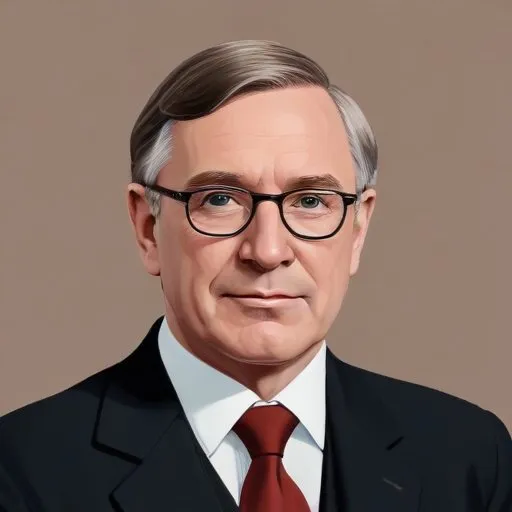
Henry Hicks: The Visionary Leader Who Transformed Dalhousie University
A Pioneer in Education and Politics
Henry Hicks was a renowned lawyer, university administrator, and politician in Nova Scotia, Canada, who left an indelible mark on the province's education system and politics. As the first minister of education in Nova Scotia, Hicks played a crucial role in shaping the province's education policy, and later, as the president of Dalhousie University, he transformed the institution into a leading national research university.
Early Life and Education
Born on March 5, 1915, in Bridgetown, Nova Scotia, Hicks was the son of Henry Hicks and Annie Kinney. He received his early education in Bridgetown and later attended Mount Allison University, Dalhousie University, and Oxford University. Admitted to the Nova Scotia bar in 1941, Hicks began his legal career, which was interrupted by his service in World War II as a captain in the Royal Canadian Artillery.
Rise to Prominence in Politics
Hicks' entry into politics began in 1945 when he was elected to the Nova Scotia House of Assembly as a Liberal for Annapolis County. In 1949, he became the first minister of education in Nova Scotia, serving in this position until 1954. During this period, Hicks implemented several reforms in the education sector, including the introduction of compulsory education for children between the ages of 6 and 16.
The Premier of Nova Scotia
In 1954, Hicks ran for the Liberal party leadership and became the premier of Nova Scotia, succeeding
Angus Lewis Macdonald. However, his government was defeated in the 1956 election by
Robert Stanfield's Progressive Conservatives. Hicks resigned as leader of the opposition in 1960 and focused on his academic career.
Transforming Dalhousie University
In 1963, Hicks became the president of Dalhousie University, a position he held until 1980. During his tenure, Hicks transformed the university from a small college into a leading national research institution. He oversaw the expansion of the campus, the construction of new facilities, and the development of new programs. Hicks' vision for Dalhousie University was to create a institution that was not only academically excellent but also socially responsible.
Legacy and Honors
In recognition of his contributions to education and politics, Hicks received several honors, including the naming of the Henry Hicks Academic Administration Building at Dalhousie University in 2002. Hicks' legacy extends beyond his institutional achievements, as he inspired generations of students, educators, and politicians to strive for excellence.
Personal Life
Hicks married thrice, first to Pauline Banks in 1949, then to Gene Morrison in 1965, and finally to Rosalie Comeau in 1988. He had four children from his first marriage: Catherine, Henry, John, and Francess. Hicks passed away on December 9, 1990, leaving behind a rich legacy in the fields of education and politics.
Quote
"The true test of a university is not its physical buildings or its material resources, but the quality of its people and the excellence of its academic programs." - Henry Hicks
FAQ
What was Henry Hicks role in Nova Scotia politics?
Henry Hicks was the 16th Premier of Nova Scotia, serving from 1954 to 1956. He was a member of the Liberal Party and held several ministerial portfolios, including Minister of Education.
What was Henry Hicks academic background?
Henry Hicks had a strong academic background, earning a Bachelor of Arts degree from Dalhousie University and a Master of Arts degree from Harvard University. He also received several honorary degrees from various universities.
What was Henry Hicks contribution to education in Nova Scotia?
Henry Hicks made significant contributions to education in Nova Scotia, introducing several reforms and initiatives to improve the quality of education in the province.
What was Henry Hicks role in the Canadian Federation of Mayors and Municipalities?
Henry Hicks served as the president of the Canadian Federation of Mayors and Municipalities, working to promote the interests of municipalities across Canada.
What is Henry Hicks legacy in Nova Scotia?
Henry Hicks legacy in Nova Scotia is that of a dedicated public servant and a champion of education. He is remembered for his contributions to the provinces education system and his commitment to public service.