


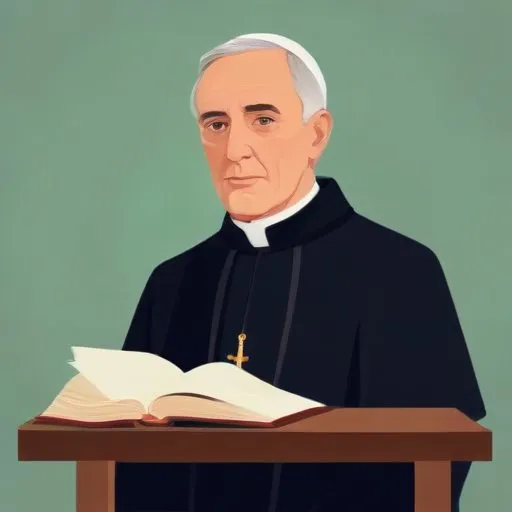
An English priest, author, and academic who co-authored the first English dictionary of Greek and Roman mythology, making classical mythology accessible to the masses.
Henry Liddell is renowned for his monumental work, A Greek-English Lexicon, co-authored with Robert Scott, which remains an indispensable reference for students of Greek to this day. This iconic dictionary, commonly referred to as Liddell and Scott, has undergone numerous editions since its first publication in 1843 and continues to be a testament to Liddell's erudition and dedication to classical scholarship.
Born on February 6, 1811, Liddell received his education at Charterhouse and Christ Church, Oxford, where he earned a double first degree in 1833. He was ordained in 1838 and soon became a college tutor, laying the foundation for his future academic pursuits.
Liddell's tenure as Headmaster of Westminster School (1846-1855) was marked by both success and turmoil. During this period, he made significant progress on his lexicon, which was first published in 1843. However, his time at Westminster was also marred by the outbreak of fever and cholera, which led to his eventual departure.
In 1855, Liddell assumed the deanery of Christ Church, Oxford, a position he held until 1891. This new chapter in his life saw the publication of his History of Ancient Rome, as well as his active involvement in the first Oxford University Commission.
Liddell's impact on Oxford life was profound, and his tall figure, fine presence, and aristocratic demeanor became synonymous with the academic institution. He played a pivotal role in navigating the necessary changes within Christ Church, ensuring a smooth transition during a period of significant reform.
In 1859, Liddell had the distinction of welcoming the then Prince of Wales (later King Edward VII) when he matriculated at Christ Church, a historic event that marked the first time a holder of that title had done so since Henry V.
Liddell's daughter, Alice, was the inspiration behind Lewis Carroll's beloved classic, Alice's Adventures in Wonderland. This whimsical tale has captivated readers for generations, serving as a testament to the creative spark that Liddell's family embodied.
Henry Liddell's life was a testament to his unwavering commitment to education, literature, and public service. His lexicon, now in its eighth edition, remains an indispensable tool for scholars, while his contributions to Christ Church, Oxford, continue to shape the institution to this day.
Henry Liddell's life was a rich tapestry of academic pursuits, public service, and personal relationships. His legacy, embodied in his iconic lexicon, continues to inspire and educate generations of scholars, cementing his place as one of the most revered figures in Oxford's history.
Born in 1801
A leading figure in the Oxford Movement, he was a prominent theologian and philosopher who converted to Catholicism, influencing Christian thought and education. He's also known for his poetry and hymns.
Born in 1809
A British statesman who served as Prime Minister four times, known for his liberal policies and efforts to reform the British Empire. He's also famous for his rivalry with Benjamin Disraeli.
