


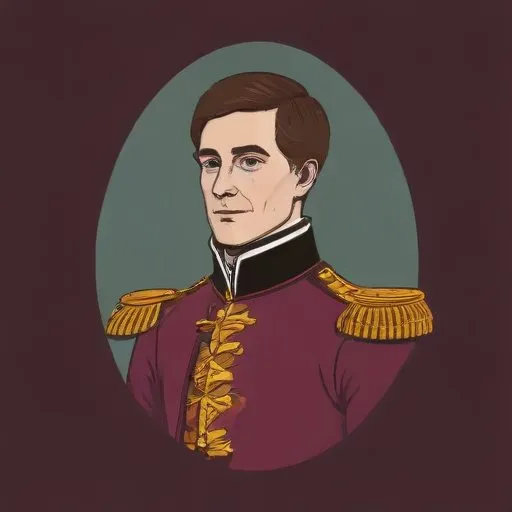
A powerful nobleman and skilled military leader who played a significant role in the Wars of the Roses and was a key figure in the Lancastrian faction. He was known for his bravery and strategic thinking on the battlefield.
Henry Percy, 2nd Earl of Northumberland, is best known for his pivotal role in the lead up to the Wars of the Roses, a series of civil wars that ravaged medieval England. As a skilled military commander and nobleman, Percy's life was marked by rebellion, exile, and power struggles that shaped the course of English history.
Born on February 3, 1393, Henry Percy was the son of Henry Hotspur Percy and Lady Elizabeth Mortimer. His early life was marked by upheaval, as his father and grandfather were killed in rebellions against Henry IV in 1403 and 1408, respectively. The young Percy spent his minority in exile in Scotland, where he received protection and tutelage from the Scottish court.
Only after the death of Henry IV in 1413 was Percy reconciled with the Crown, and in 1414, he was created Earl of Northumberland. This marked the beginning of his rise to power, as he occasionally served with the king in France and dedicated himself to protecting the border to Scotland. However, his main occupation was to navigate the treacherous world of medieval politics, where alliances were forged and broken with ease.
A bitter feud with the Neville family, particularly with Richard Neville, Earl of Salisbury, became a defining characteristic of Percy's life. This rivalry was intertwined with the conflict between the Dukes of York and Somerset over control of national government, setting the stage for the Wars of the Roses. The tension between Percy and the Nevilles would ultimately prove fatal, as it contributed to the outbreak of war at the first battle of St Albans, where both Percy and Somerset were killed.
Henry Percy's family background was steeped in nobility and power. His mother, Lady Elizabeth Mortimer, was the daughter of Edmund Mortimer, Earl of March, and Philippa, Countess of Ulster, daughter of Elizabeth de Burgh and Lionel of Antwerp, son of Edward III. His father, Henry Hotspur Percy, was a renowned military commander, and his grandfather, Henry Percy, 1st Earl of Northumberland, was the first of the Percy family to hold the title.
Henry Percy, 2nd Earl of Northumberland, left an indelible mark on medieval English history. His tumultuous life, marked by rebellion, exile, and power struggles, ultimately led to his untimely death at the first battle of St Albans. Nevertheless, his legacy serves as a testament to the complexities and intrigue of medieval politics, where alliances were forged and broken, and the fate of kingdoms hung in the balance.
Henry Percy, 2nd Earl of Northumberland, remains an enigmatic figure, whose life was shaped by the tumultuous landscape of medieval England. His story serves as a poignant reminder of the complexities and intrigue of power struggles, where allegiances were forged and broken, and the fate of kingdoms hung in the balance.
Born in 1133
King of England from 1154 to 1189, known for establishing a strong centralized government, reforming the English church, and his tumultuous relationships with Thomas Becket and his sons.
Born in 1386
Led a victorious English army in the Battle of Agincourt, a major English victory in the Hundred Years' War, and was a popular king who strengthened the English monarchy.
Born in 1340
A powerful and wealthy medieval English nobleman, known for his immense influence on English politics and his role in the Hundred Years' War. He was also a patron of the arts and a founder of Trinity College, Cambridge.
Born in 1925
A renowned stage and screen actor, celebrated for his versatility in playing a wide range of characters, from Shakespearean roles to villainous parts in popular TV shows.
Born in 1729
An 18th-century Irish bishop and poet, he's remembered for his influential collections of traditional Irish ballads, which helped preserve the country's cultural heritage.
